

Iran's Survivable Second Drone Strike
Why 10.000 interceptor drones aren't much, what the US should have done instead, and why it's time for the EU to start panicking.

“There is no greater source of pride than seeing so-called technological superpowers forced to kneel before an Iranian-made drone and resort to replication to fill their own capability gaps.”
— Brigadier General Abolfazl Shekarchi, Senior Spokesman for Iran’s Armed Forces (December 2025)
“In the past, we imported barbed wire, but now we export drones.”
— Major General Amir Ali Hajizadeh, Commander of the IRGC Aerospace Force, in 2022
“Drones are far worse than climate change. Stopping this global arms race is cheaper than building underground kindergartens and protecting every port from terrorists.”
— Volodymyr Zelenskyy (September 2024), warning the UN General Assembly that the rapid proliferation of low-cost, lethal drones is a generational security crisis.
“The situation shows how difficult it is to provide 100 percent protection... even Gulf countries with advanced systems failed to intercept every drone. The threat is still there, and it is growing.”
— Volodymyr Zelenskyy (March 2026)
What You Will Learn In This Deep Dive
“Can’t stop everything”: Evidence of a Rushed Campaign
Missile Strikes
Drone Strikes
“Total Air Dominance”: The Sliding Scale of Air Superiority
This Is Not Iraq
Drone Air Superiority?
Survivable Second Drone Strike
Learning On the Job
Quo Vadis
Ukraine to the Rescue?
Potential for a Ukraine-US Deal?
Which Interceptors?
Timing Is Everything
Favorable Cost-exchange Ratio?
Not With Ukraine
AI Vs. Ukrainian Tech
What Ten Thousand Interceptors Get the US
10.000 Interceptors
8.000 Interceptors
6.400 Interceptors
5.000 Interceptors
It Likely Gets Way Worse
Can the US Make Enough Interceptor Drones On Its Own?
Too Little, too Early
Trade-offs: No Shortcuts, Only Cuts
Drone Success Is Built Not Bought: What to Do Now
Disclaimer: this article represents the personal opinion of the author, is neither political, nor financial, or legal advice. Like AI, we make mistakes when researching our articles. Let us know, and we’re happy to correct them.
This Deep Dive contains around 8.000 words, or 25 pages, of insights you won’t find anywhere else.
Another strike, this time on oil infrastructure in Fujarah, UAE. Crucially, this fire has been caused by debris, showing the importance of intercepting drones before they reach their target area. More on Reuters
“Can’t stop everything”: Evidence of a Rushed Campaign
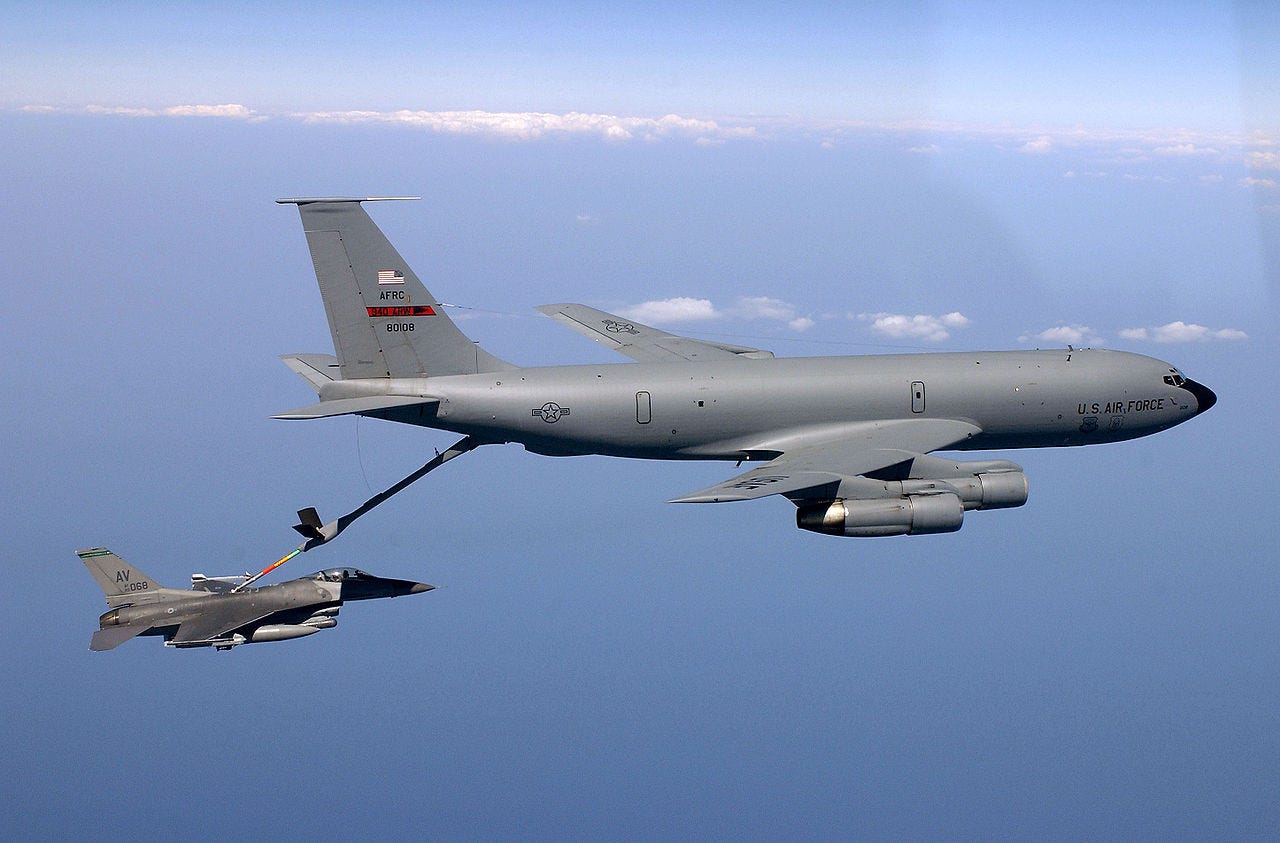
Boeing’s famous Stratotanker, one of the United States’ most important means of global power projection. Photo: Wikipedia
Missile Strikes
On Friday, March 13th, 2026, at Prince Sultan Air Base in Saudia Arabia, five US refueling planes, likely Boeing KC-135 Stratotankers, were struck by Iranian missile strikes. The planes, which cost around $80 million when adjusted for inflation, were “damaged, but not destroyed, and are being repaired”, the WSJ quoted CENTCOM on Saturday.
The cost of the planes obscures their importance: Without them, F-35s and earlier versions of the US’s fighter-bomber planes can’t fly bombing campaigns deep into Iran, and F-22 Raptor air superiority fighter jets can’t accompany the US’s fighter-bombers into enemy airspace (they have 2-2,5 hours of flight time without enemy engagement, down to 1-1.5 hours during active combat, with a combat radius of 590 nautical miles). The US does not release official numbers, but media (close to the Turkish government) counted 17 Pegasus and 62 Stratotankers in the area. This would bring the number of tankers out of service to seven, or slightly under ten percent.
The incident raises questions about the ability of the United States to protect its most sensitive assets in the ongoing conflict, and about potential miscalculations and improper preparations for a war, which shows evidence of fatal underestimations on both sides.
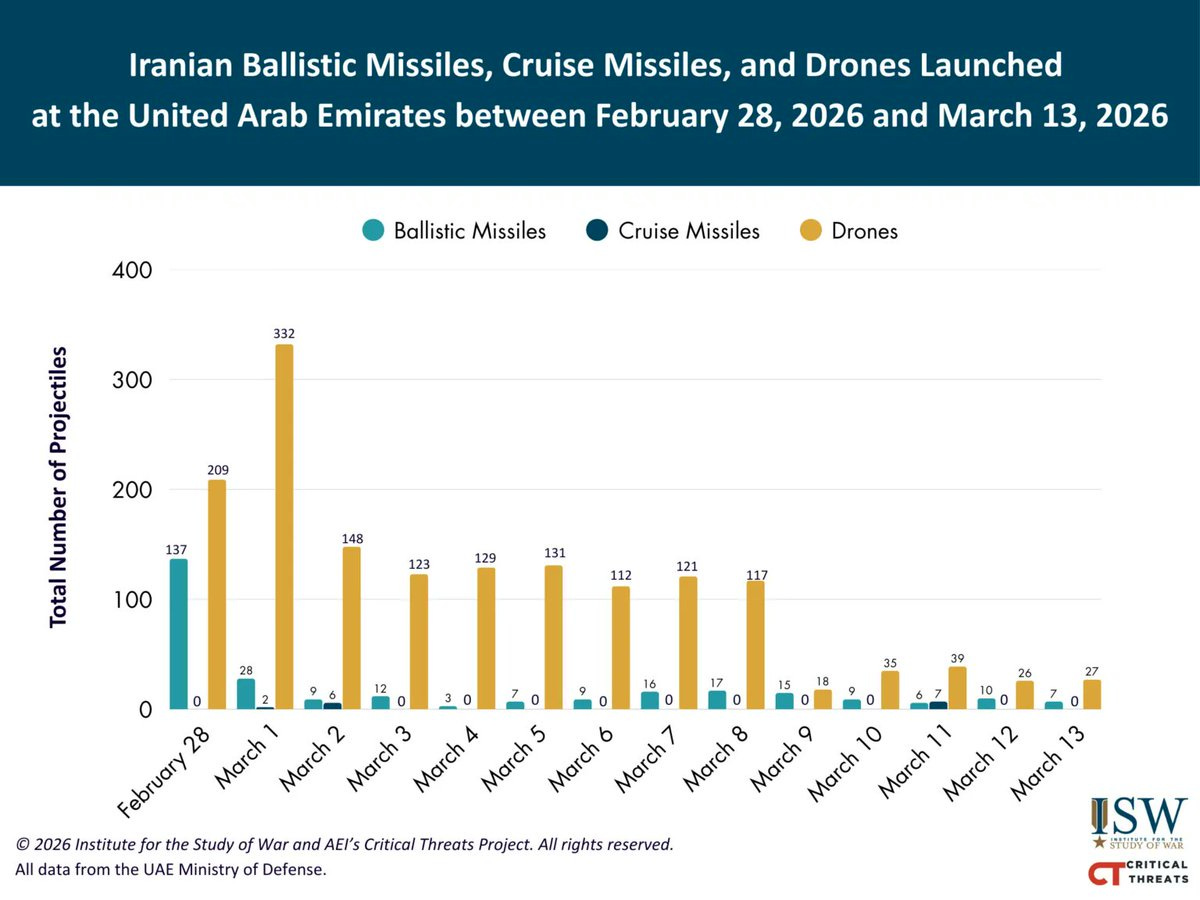
Lack of materiel or holding back stockpiles for new strikes? Only time will tell.
Since the beginning of the war, Iranian strikes with both missiles and drones have fallen off a cliff. While it is easy to take this as evidence of destruction of Iran’s stockpiles of missile and drone capabilities, at least until today, there is significantly more evidence of destruction of the former and significantly less evidence of destruction of the latter. Unfortunately, the latter, drones, are what Iran is claimed to have at least an order of magnitude or two more of than missiles. It might also be harder to degrade or destroy Iran’s drone launch capabilities; not an order of magnitude harder, but lose-the-election-level harder to impossible. Let’s discuss.
Drone Strikes
Video evidence of slow, highly vulnerable Iranian drones striking US, allied, and friendly (and even enemy) assets with impunity shocked obvservers throughout the first two weeks of the conflict, with CNN being quoted as stating the strikes as a signal of US bases appearing “alarmingly defenseless”. Not just cruise and ballistic missiles, which are hard to detect and intercept, are hitting US military installations, but also drones like the Shahed 136 and the potentially much more dangerous Arash-2 drone, which combines the potential destructive power of a light JDAM gravity bomb with the precision of a cruise missile and the range of a Sukhoi Su-43 (NATO handle: Fullback; 4.000 km ferry range; Arash-2: 2.000 km nominal range), and removes the risk of exposing a bomber to enemy airspace, potentially spelling the end of the air superiority paradigm which has defined more than a century of bombing campaigns. The Arash-2 is rumored to have been the drone responsible for killing six service members in the port of Shuaiba, and the strike against Nakhchivan airport in Azerbaijan.
If you’d like to learn more about the Arash-2, we recommend our tech-strategy deep dive on this remarkable and potentially globally unmatched deep strike drone and the implications of its potential fielding in Iran and mass production. The report, which was released last week, contains a lot of cautious “potentially” phrasings, many of which would unfortunately not be necessary anymore, were we to write the article this week, as evidence of the use and specs of the Arash-2 has unfortunately been mounting since its release.
During the past two weeks, we got to watch videos which show how drones that should not be able to reach anywhere near US installations like Al Udeid air base, with about 10.000 military personnel, slowly nose-dive into some of the most expensive installations like radar and satellite communications architecture. We also got to witness how drones attempted to strike key energy infrastructure like Saudi Aramco’s Ras Tanura, which houses its largest domestic refinery and a key crude export terminal, in attacks similar to those of Ukraine on Russian oil infrastructure.
This begs the question what air dominance means in the age of Long-range Terrorism.
Questions?
Answers. Better call Marc!
More about Marc.
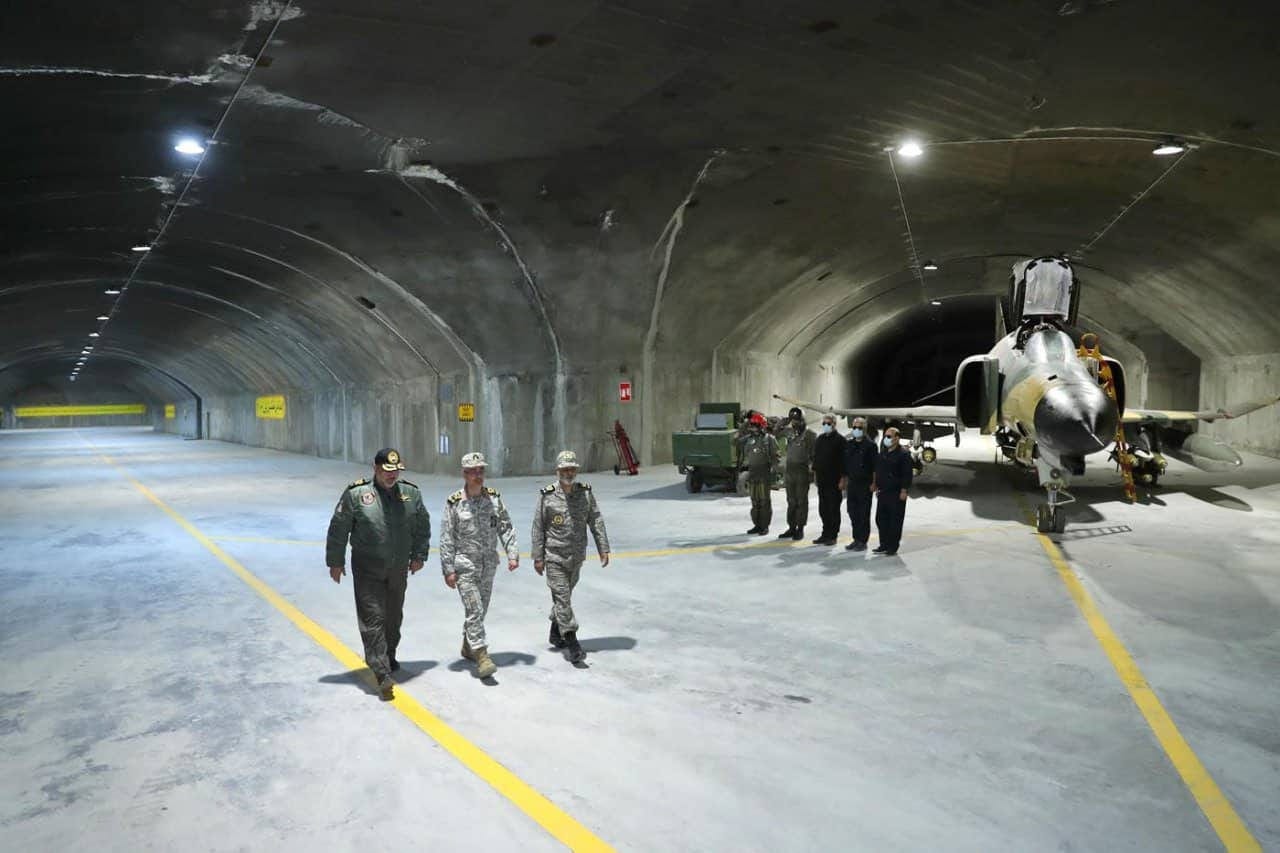
Vastness: Iranian F-4 Phantom at the Oghab 44 underground airbase, February 2023. Photo: FARS/Iranian news agency
“Total Air Dominance”: The Sliding Scale of Air Superiority
Quote from Secretary of War Pete Hegseth on March 10th:
“...we’re winning decisively with brutal efficiency, total air dominance and an unbreakable will...”
Quote from the New York Times on Saturday, March 14th:
“The United States and Israel have greatly diminished the Iranian military’s ability to retaliate against or menace American and Israeli warplanes... But the two countries still face risks from the dwindling number of Iranian air-defense systems and mobile missile launchers that can “shoot and scoot” to avoid detection from American surveillance aircraft.”
The current air campaign, part of which has been described by Israeli forces as “TEL-hunting”, should look familiar to those who remember Desert Storm. Back then, it was called Scud-hunting, named after both the Soviet-era missile launcher and the RR-11/-17 ballistic missiles most used in the conflict. A TEL is a transporter-erector-launcher, or a mobile missile launcher. The tactic employed by Iraqi forces during Desert Storm, descriptively called shoot-and-scoot, is similar to the one used by Iran today, though with two major differences.
This Is Not Iraq
First, Iran has a much more extensive network of tunnels and underground complexes, storage facilities and production, called “missile cities“, only some of which are known to the public. It’s far from impossible to degrade a lot of these underground facilities by destroying or blocking their entrances (as has been the objective and result of many bombing strikes so far), and it is almost certain that the US and Israel have spent years tracking movements of men and materiel into and out of these tunnels, and might even have infiltrated them. Most of Iran’s TELs need to enter the complexes to hide, refuel, receive maintenance and refill their missile launchers with missiles.
This is where the second major difference to the Desert Storm air campaign (as there is no ground campaign so far) comes into play: Both missile launches and vehicle movements into and out of Iran’s missile cities are being tracked by US and Israeli forces via space-based (our piece on the US’s Proliferated Warfighter Space Architecture) and aerial reconnaissance systems (e.g. MQ-9 Reapers for multispectral intelligence and the Navy’s EA-18G Growlers for signal intelligence (SIGINT)), and, for the first time outside of Ukraine at this scale, analyzed via systems using computer vision algorithms and machine-learning systems trained on millions of images and videos of launchers and other equipment.
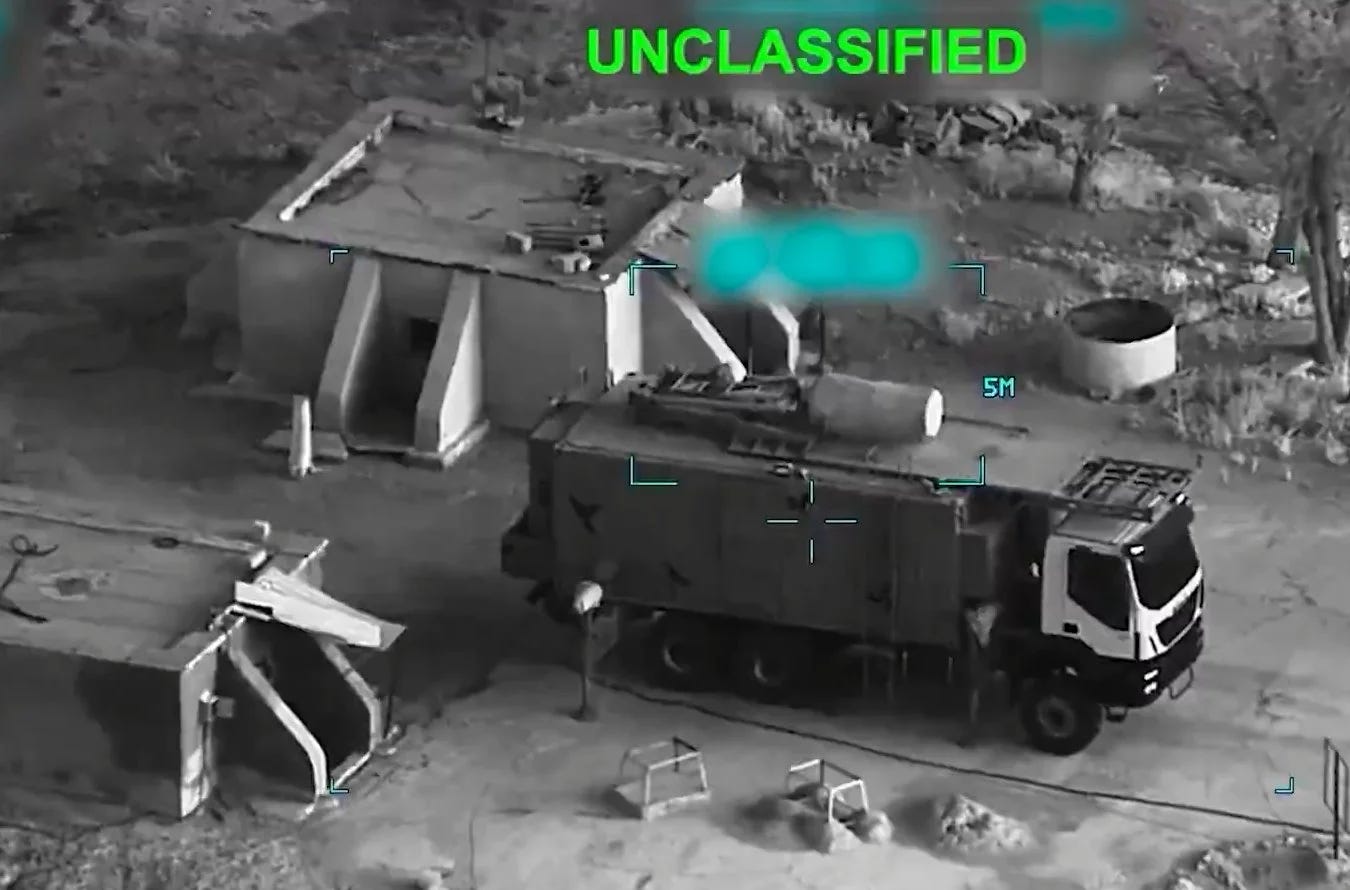
Before: A Cobra V8 EW system prior to its first and only date with a US missile, likely a Tomahawk. Photo: CENTCOM
The same is true not only for ballistic missile launchers, but also for its air defense systems (Iran operates a variety of systems: Bavar-373 (a domestic S-300 alternative), Arman, Azarakhsh, Mersad-16 (Kamin), and Ya Zahra, among others). These systems, together with the ballistic missile TELs and electronic warfare (EW) systems like the Cobra V8, have been among the key targets of the early Israeli and US air campaign. The domestic air defenses, together with the remaining S-300 systems from Russia which have not been degraded or destroyed in the strikes at the end of last year or beginning of 2026, as well as Iran’s stationary air defenses (which are mostly centered around Tehran), have been what the US and Israel have expended most of their precision missiles and most of their stealth fighter-bomber flight hours on.
How many ballistic and air defense missile launchers does this leave Iran with? In a country with Iran’s size, and Iran’s size of underground facilities, and Iran’s amount of subterranean production and storage, the factual reality is: Nobody knows. As a matter of fact, we believe that nobody can know until a large-scale ground campaign enables the in-situ identification of Iran’s remaining capabilities. Tunnel entrances may be relatively easy to spot from the air; the extent of tunnel networks under ground, not so much.
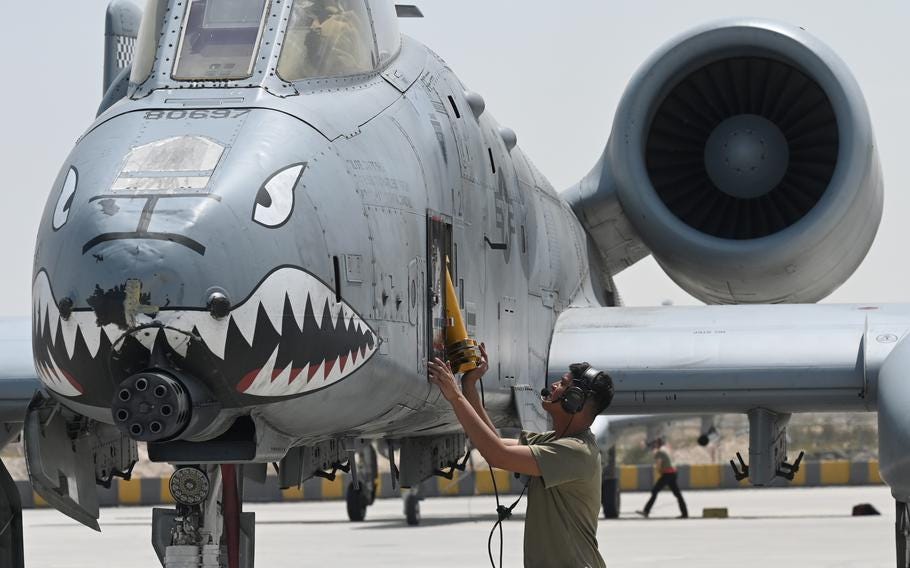
Warthog: The last face you’ll see. Photo: US Air Force
While the US has started deployment of A-10 Warthogs to the region (which are actually called Fairchild Republic A-10 Thunderbolt II), the famous, heavily armored, subsonic close air support (CAS) flying 30-mm guns (70 rounds per second!), is viewed as a sign of confidence in the United States’ air superiority over Iran. Until its successful use against Irani targets has been documented in significant numbers, however, it could be just as likely viewed as PR, just as the recent photo ops with JDAMs. As a matter of fact, given the Warthogs’ role as CAS means that it’s mainly used as ground support in combined arms maneuver (also called combined arms warfare; CAM/CAW, respectively), and given the explicit non-denial of a ground offensive by the US president, there’s considerable backroom chatter that A-10s are not in the region because of air superiority, but because of failure to achieve it against smaller and concealed ground assets. Another purpose could be drone hunting, given their high agility. Another potential purpose is securing shipping lanes. This means that the A-10 in the region are not necessarily a definitive sign for air dominance over Iranian land territory.
Then again, the US has started flying B1 bombers frequently, which are much easier to detect than the stealthy B2s, and has recently begun outfitting them with bunker buster heavy bombs; a sign of expanded air superiority, and of the air campaign moving into the next phase. As we see, the fog of war (fog of TECH WARS?) is thick with this one. What we can assess, however, is the extent of geographic air superiority.
Western Iran is getting pummeled, there is no doubting that. The East of Iran, not so much. From TWZ on March 11th:
“Still, B-1s and B-52s will likely operate over western Iran, where degradation of enemy air defenses has been the focus for nearly two weeks. Venturing into the eastern part of the country, which has seen far less attention, probably remains too risky. This is underscored by the map below, which the Pentagon released yesterday, showing the distribution of strikes across Iran during the first 10 days of the conflict (February 28 to March 9).”
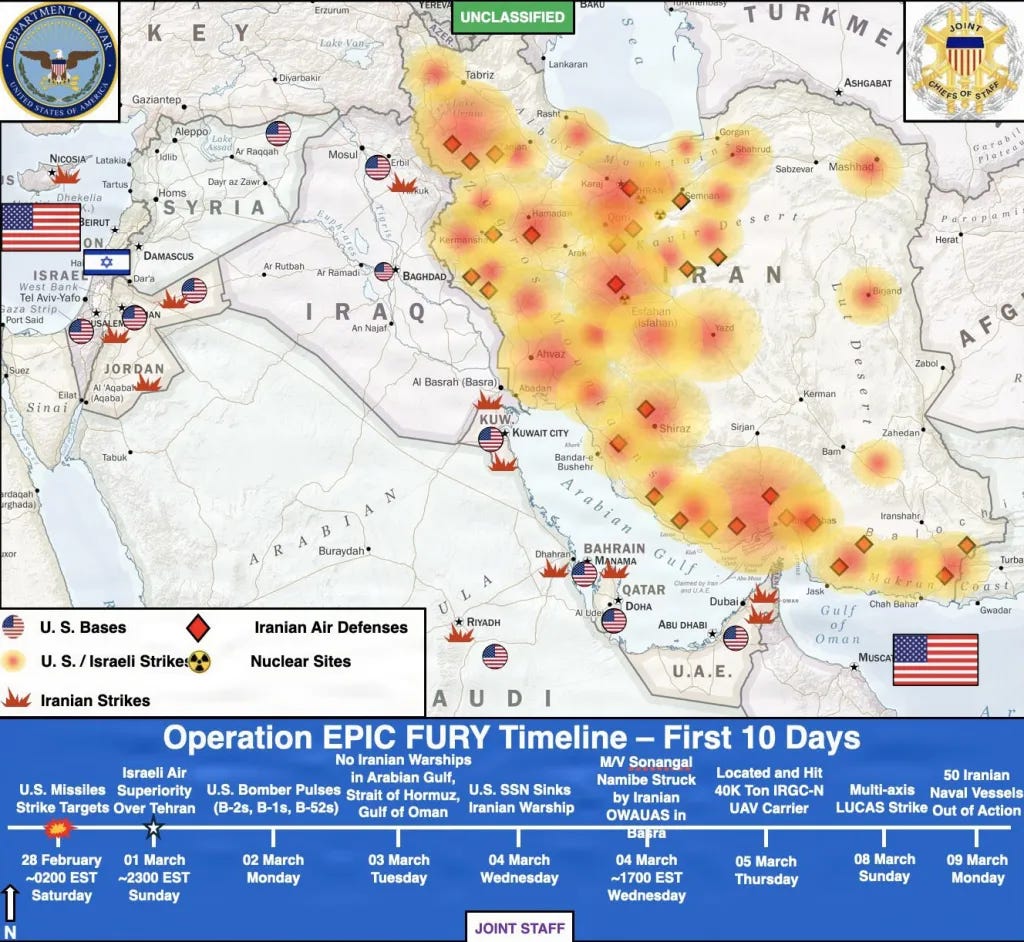
Go West: The US and Israeli air campaign has been limited to the West of Iran so far. Image: CENTCOM
Drone Air Superiority?
Air superiority is not as black-and-white or binary as most of the (military) press might have one believe, and, while their attacks have crippled Irani’s ability to use the aerial domain or deny its enemies access to it dramatically, striking about 6.000 targets within the first two weeks of the conflict (according to DoW reports), “total air dominance” over Iran is certainly not what the United States and Israel have achieved, yet. This is even more true for drones. Let’s discuss what air superiority actually means, and why this matters in respect to drones.
Air superiority, a concept which dates back to the 1921 book “The Command of the Air” by Giulio Douhet, describes the ability of a force to secure access to an airspace for its own and friendly sources, and deny access of enemy forces. Total air superiority, also called air supremacy (and what Hegseth was hinting at with his statement) means that friendly aerial assets can maneuver and attack with impunity, and that the enemy cannot fly or launch anything, and requires total or almost total degradation or destruction of all airspace assets (suppression of enemy air defense; SEAD), including any air defense, missile launchers and their detection systems, airfields, maintenance, production, as well as the deployment of detection and mitigation assets in order to deny any enemy use of the aerial domain. Three levels or grades of air control are being distinguished in modern warfare:
Air Parity (lowest grade): A state of equilibrium where neither side holds a significant advantage. Aerial warfare is stalemated, and both sides have limited freedom of action.
Air Superiority (middle grade): The degree of dominance where one side can conduct operations, at a given time and place, without prohibitive interference or action from the operational area by the opposing force. It allows for relatively free operations.
Air Supremacy (highest grade): The ultimate degree of superiority, where the opposing air force is incapable of effective interference in or action from the operational area.
Achieving total air supremacy over a country with the size and geographical complexity of Iran is, understandably, extremely hard. While it is possible to achieve air supremacy through systematic degradation of air defense (exactly what the US and Israel are doing), we argue that it is near-impossible to achieve air superiority against Iranian drones without a successful large-scale ground campaign. This is due to the following crucial differentiating factors from traditional aerial assets like planes and helicopters:
Most drones are independent of airfields (with key exceptions being its medium-altitude long-endurance (MALE) drones like the Shahed-129, a MQ-1-Predator-like drone).
Much higher survivability and lower visibility during “shoot-and-scoot” maneuvers of drone launchers due to concealment per default (trucks, containers, pick-ups), size of launchers and drones, and much lower launch visibility (even rocket-assisted takeoff (RATO) kits only fire for 2-3 seconds underneath the drones).
Production, maintenance and supply chain logistics can be performed in a dispersed and survivable manner, decoupled from central command, without the need for large tunnels or underground complexes for resupply.
Drone carrier, launcher, and drone launch operation is not dependent on skilled operators.
Other than traditional missile TELs, which need firm, load-bearing roads, multi-drone carriers only need basic dirt roads, and single-drone carriers like pick-ups don’t need roads at all.
Questions?
Answers. Better call Marc!
More about Marc.
You’re Missing Out!
Join some of the world’s most senior top executives in MoDs, industry and investment, including some of those behind the programs and products you are reading about in our publication. Pierce through headlines and inflated innovation claims like a bunker-buster through the ground, and gain instant access to hundreds of pages of some of the deepest analyses anywhere on the web. Tradeoff analysis: What’s the bigger risk: a couple bucks spent or missing out on insights which our readers describe as truly unique? Your subscription gives you exclusive access to up-to-date reports about tech, strategy, and procurement innovation you won’t find anywhere else. Get subscribed to TECH WARS now - you’ll be in good company.

Survivable Second Drone Strike
Denying Iran the ability to make, move and launch drones solely with an aerial campaign is hard to imagine. Not only is it hard to imagine that the US and Israel would be willing to perform the necessary carpet bombing of significant parts of Iran’s 1.648 million square kilometers of surface area (this is excluding its allies in the region), it is hard to imagine that they could if they wanted to, from a pure defense economic reality, produce even just one of the ingredients, the ordnance, necessary to carry out such a campaign.
We can conclude, then, that this is not Iraq in terms of the following key aspects:
Iran is ca. 3,8 times larger than Iraq (17th largest country in the world), and dominated by rugged, mountainous terrain (>50%).
Space and aerial (including drone-based) intelligence, surveillance and reconnaissance have turned the battlefield transparent (this is partially true for Iran as well, as Chinese and Russian intelligence seem to have been supplied to the IRGC).
Distributed, concealed production and operation of fire-and-forget long-range strike drones in potentially far greater number than their enemies can produce interceptor solutions (more below) enables Iran to maintain the capability of striking assets of enemies and their allies long after traditional air superiority is achieved.
Without a ground campaign, which is highly unrealistic given public opinion being the reason why US-led engagements in wars have historically ended, and the approval rate of the war being the lowest in history and sinking, this leaves just one option for the US-Israeli disarmament of Iranian long-range strike capabilities (“Long-range Terrorism”; our piece on Iran’s capabilities and what they mean for the world): Cooperation of the Iranian public.

King’s gambit: Trump calling on Iran’s opposition to take over.
One of the key pieces of calculus behind at least the United States’ Epic Fury campaign was that the large part of its population unhappy with the regime of the Ayatollah would take over the country. So far, though, other than a fierce reaction of the Iranian regime (to protests, prior to the war), which has apparently led to the murder of as many as 30.000 anti-regime protesters, the Iranian regime, its army, and the Iranian Revolutionary Guard Corps (IRGC) seem to be firmly in power. That being said, it remains to be seen whether the Iranian Army and IRGC will be capable of sustained, successful operation under its Mosaic Defense Strategy. It’s also hard to impossible to assess how the Iranian people will react to future developments as the US-Israeli campaign inevitably drags on.
This leaves the US with the two major classic directions for the war: double down or pull out. As we examine some of the hits the asymmetrically superior attackers have taken, it seems more and more evident that, while both sides had about 50 years to prepare for this war, one side did prepare better for the asymmetrical aspect of it.
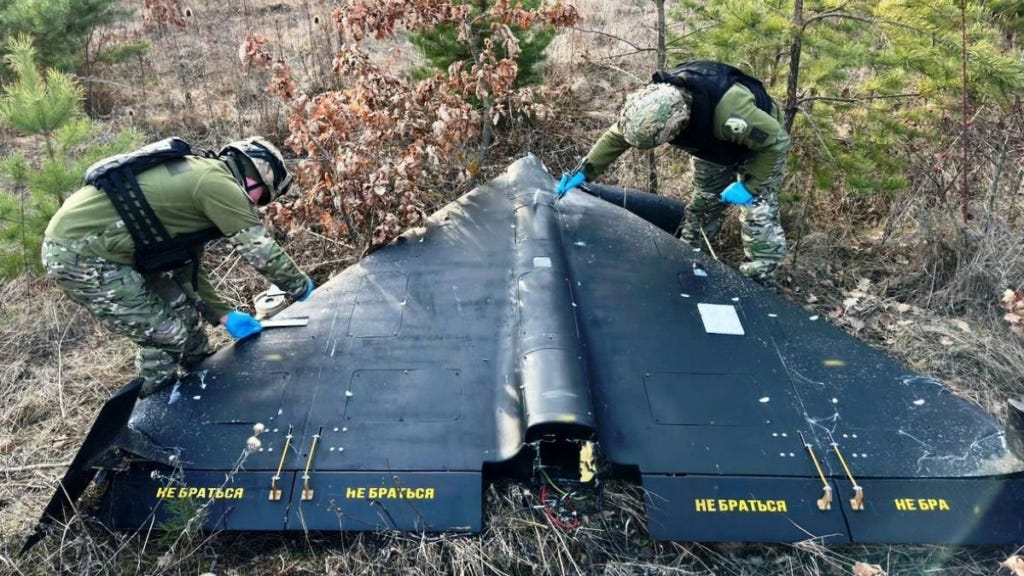
Ukrainian soldiers inspecting a recent version of a Geran-2, Russia’s domestic Shahed-136 variant. Photo: Ukrainian MoD
Learning On the Job
If we were harsh, we would say that the United States has started an asymmetrical war it isn’t prepared for. We might say that the world gets to watch the evidence for lack of or failed planning hit the ground like a plane crash in slow motion. Let’S examine:
Factual closure of the Strait of Hormuz due to lack of insurance, rise of US gas price by 25%, purchases of sanctioned Russian oil.
Six (seven?) of ~80 refueling planes in the theater grounded or downed, including five hit in a single attack at an air base in Saudi Arabia.
Deaths of service members reaching the double-digits, half of them killed within major US bases by cheap drones.
Iranian leadership walking the streets of Tehran without guards or protection during Quds, akin to how Zelensky walked Kyiv during the early days of the war.
Daily drone and missile strikes against US allies in the region, killing civilians, damaging key energy infrastructure, and hitting US bases, including sustained ballistic missile strikes at an average of ten per day.
Key assets pulled from multiple other theaters, leaving local US military presence current conflicts like the one with Venezuela, and the potential future one with China, less well-equipped.
Houthi leadership/Yemen declaring that have made the decision to enter the war, with “zero hour” approaching, threatening to close the red sea for maritime traffic, which would force oil, fertilizer, and other key global shipping around the Cape of Africa, potentially causing supply chain and economic disruptions akin to Covid-19.
Hasty redeployment of missiles from South Korea/Indo-Pacific hinting at insufficient CENTCOM/US stockpiles.
Gulf States’ “running dangerously low on missiles” and having to perform air defense triage as early as 5th of March, with limited options for resupplies.
No publicly released numbers as to how much of Iran’s stockpile of an estimated 80.000 drones and capability to manufacture up to 10.000 drones per month has been destroyed, and evidence mounting that not even disrupting production will be possible without a ground campaign.
Approval rates for the war (public opinion being the most important go/no-go factor for US wars) are the lowest of any war in US history.
Lack of clarity whether the Iran war leaves the US stripped of crucial Patriot missile stockpiles, which are slow to replenish, amidst continued Iranian strikes on it and its allies, and interceptor use estimated at 1.900 by March 13th.
Successful daily strikes against Israeli targets in higher numbers than during the “12-day War”, including major urban centers hit by cluster munitions, despite Iron Dome (”In addition to three conventional ballistic missiles that struck populated areas, 11 cluster missiles have penetrated Israel’s air defense system since the war began, according to a Haaretz analysis. By comparison, only three cluster missiles struck Israel in last year’s war with Iran.” - Haaretz)
Mounting evidence of new, more powerful drone models successfully fielded by Iran during the conflict and used to successfully strike targets, hinting at capabilities held back in anticipation of this conflict, and potential lack of preparedness.
No help from Ukraine, arguably the world’s most experienced nation at intercepting Iranian drones (due to dismissal by the US administration), other than a “team of experts“.
Continuous retaliatory strikes across the entire region, disrupting shipping and logistics, travel, tourism, energy and other production (e.g. UAE’s largest oil refinery), and economic activity, sending oil and fertilizer prices skyrocketing, with potentially dire consequences for global markets and supply chains, and mounting pressure on Gulf states to convince the US to end the war.
Quo Vadis
Many developments remain to be observed and analyzed (count on us to do so), with the most important ones being the demonstrable survivability of Iran’s government, command, and defense capabilities, and the impact of its distant (Russia, China) and closer (Houthis) allies will have on the continuation of the conflict. The goal of the above list of Iranian successes is not to talk down the United States’ and Israel’s achievements - that would be virtually impossible - but to perform the important task of pointing out potential strategic, operational and tactical holes in terms of planning and execution, particularly pertaining to unmanned systems warfare.
While there are few certainties in any conflicts, and even less in asymmetrical ones, two things stand out:
The attackers were insufficiently prepared for Iran’s unmanned capabilities.
This war is far from over, and particularly Iran’s ability to harass and potentially strategically harm participants and non-participants of the conflict remains credible until both the destruction of and clarity about the destruction of what can potentially be considered the world’s largest asymmetrical supply chain and thus drone air superiority has been achieved.
There’s a lot to learn from the US-Israeli-Iranian drone war contained within this wider engagement (the Chinese government certainly agrees!), and Western nations and their Asian allies better take better notes than during the initial years of the Ukraine war, should they wish to avoid a similar strategic bottleneck as is now evident on the US-Israeli side of the Iran war. The bottleneck we are referring to, of course, is the lack of interceptor solutions, particularly of affordable and rapidly produceable interceptor solutions, against Iran’s drone arsenal.
The United States seem (or have declared) to have begun to roll out interceptor drones as a solution. As we’ll see, the interceptor drones are such a small part of the solution, and far less effective than most people think, that taking the purchase of 10.000 interceptor drones as a solution to the shot-exchange/cost-exchange problem the US is predictably but unpreparedly facing in Iran, is a strategic folly at best.
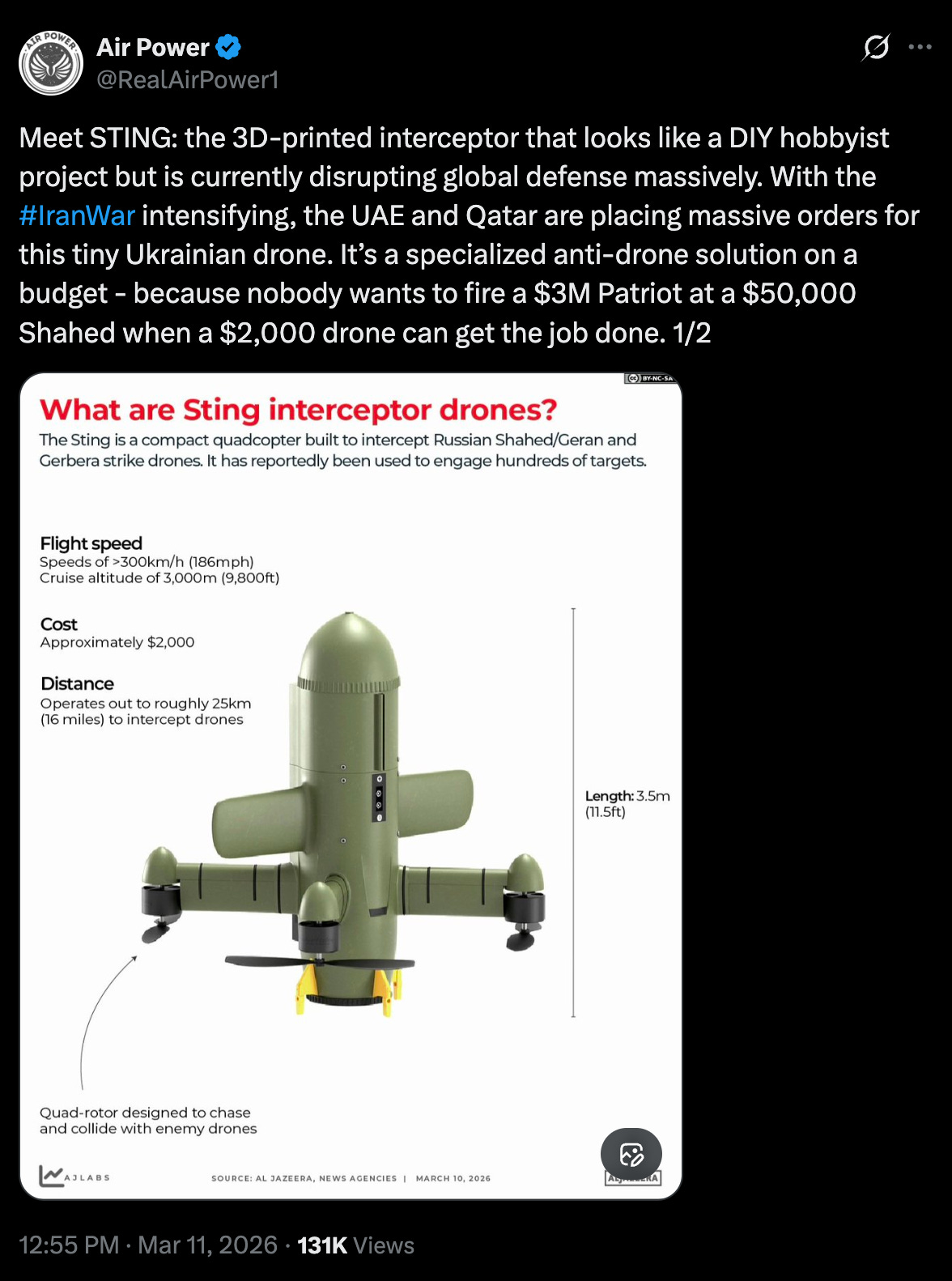
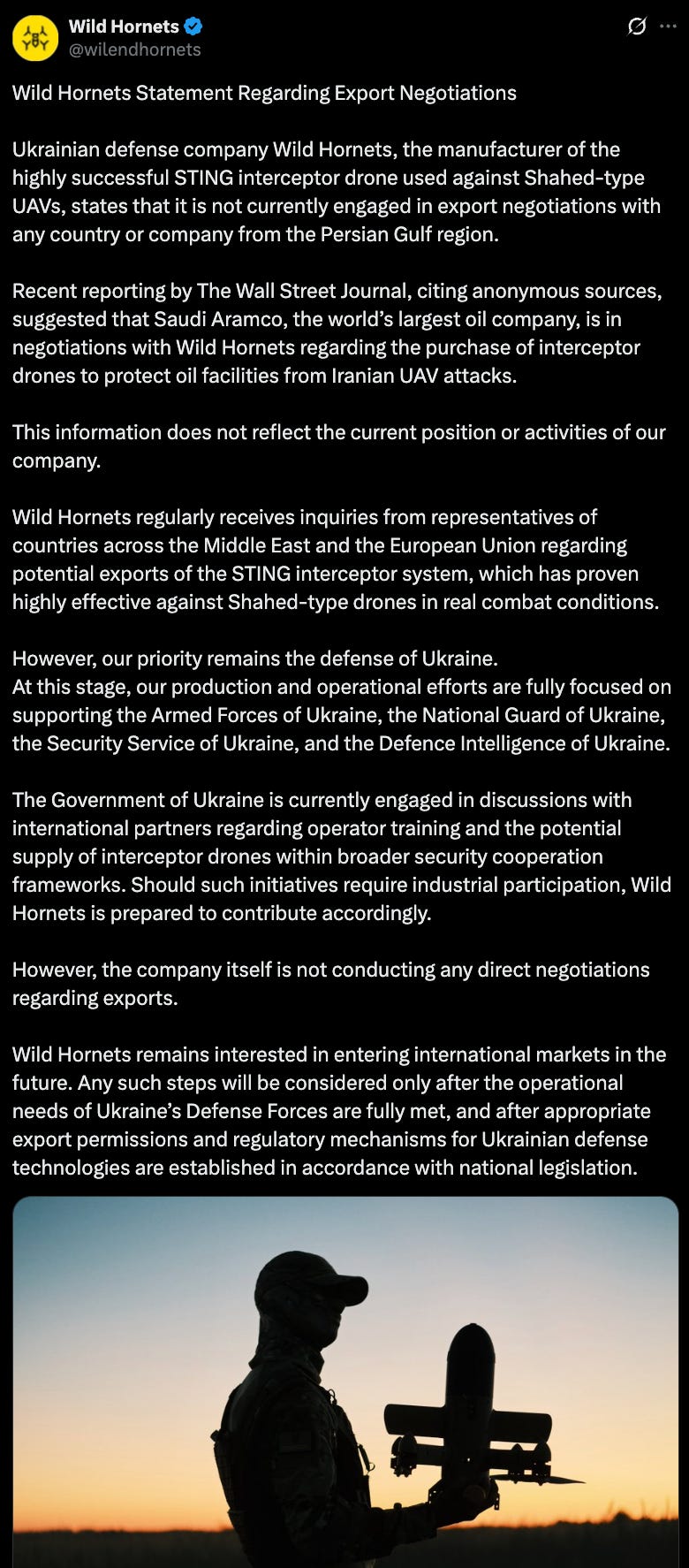
Wishful thinking vs. reality. As we detail below, there’s a constant shortage of interceptor drones in Ukraine, and since the country understandably only allows for the export of surplus production, that’s that.
Ukraine to the Rescue?
Ukraine possesses vast interceptor drone stores, enabling it to produce up to 150.000 interceptor drones within weeks, depending on logistical constraints.
Not.
Ukraine produces around 45.000 interceptor drones per month as per early 2026 (”1.500 per day” supplied to frontline troops in December and January). This should be treated as a maximum, not as a rate that is sustained continuously, as the war produces shifting demands for Ukraine’s drone supply chain. Though it is also reported that Ukraine has been able to increase interceptor production eightfold in 2025, from its early production baseline in 2024.
A note on manufacturer claims:
These are almost always correctly flagged as capacity (e.g. up to 50.000 per month), and as such, they are strongly constrained by available funds, parts, materials, machines, and - crucially - manpower.
As far as lean manufacturing is concerned, Ukraine’s production of interceptor drones is about as lean as it gets. The entire supply chain is so squeezed that units raise funds for parts. There is a constant shortage. This is evident by the lack of exports and sales to other countries, despite the slow opening up of Ukraine’s defense exports by the government.
While it is not impossible that Ukraine has a small reserve of drones, and while the logistics supply chain will always contain storage facilities with a certain amount of forward-positioned stocks, the expectation should be that there is next to nothing to share. And while failed interception attempts, layered attacks, and low-visibility routing of Shahed and other drones are among the reasons why Ukraine gets hit, shortage of interceptors is certainly among the top of the list. As we’ll see, the drones coming to the Gulf theater aren’t exactly 100% Ukrainian.
Before we get to the drones in question, we should assess the potential for a future Ukraine-US drone supply deal.
Potential for a Ukraine-US Deal?
If Ukraine is short on drones, and the US “know more about drones than anybody” (POTUS), why Ukraine’s offer of support for (a deal with) the United States, then? The obvious reason is that Ukraine doesn’t just need interceptor drones, it also needs money and PAC-3 (and lesser version PACs, Talons, etc.) interceptor missiles. And to obtain and use interceptor missiles, it needs the US’s goodwill. The current administration of the United States has repeatedly demonstrated that it won’t pick sides, and if so, it’s rather not the one of Ukraine (evidence: purchase of oil from Russia, denial of intelligence, full stop of war aid). From a defense-strategic perspective, until it produces its own ballistic missile interceptors and finds more predictable sources of money (Saudi Arabia? Apparently negotiations with Saudi Aramco are underway), Ukraine needs the US.
Numbers of the US’s domestic interceptor production are not publicly known (and would be even harder to verify). We’ll abstain from discussing them as anything more than an estimated value to hold against, not precisely compare or calculate, the US’s ability to ramp up drone defense on its own at the appropriate production and deployment rate, and at a favorable, or at least survivable, cost-exchange ratio. This, in our view, will be the determining factor for a potential turnaround of the US on the question of a drone supply deal.

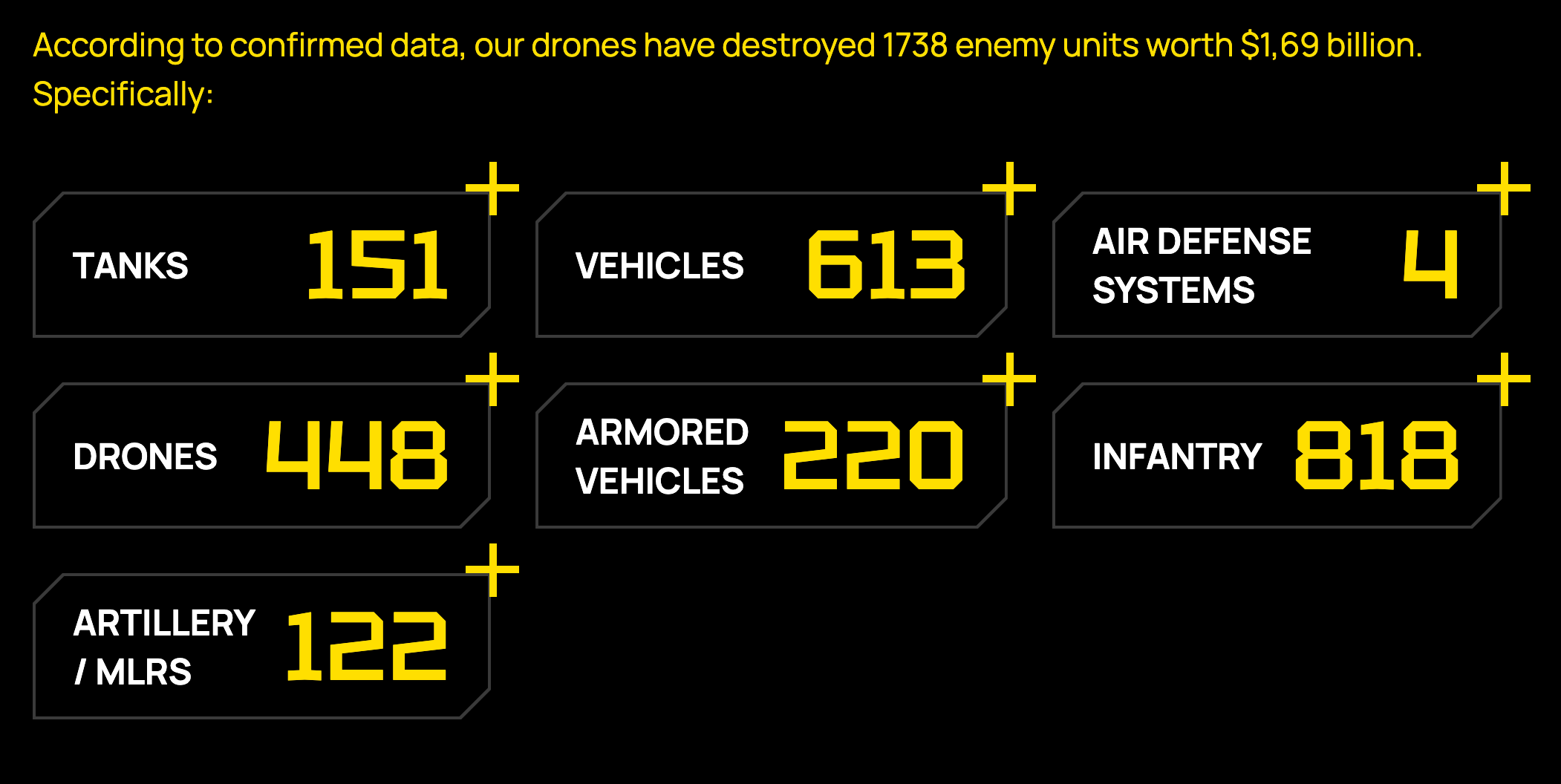
Not to be messed with. Wild Hornets have defined the nimble design and production of racer-inspired interceptor drones, and today are by far the largest producer of the highly sought-after munitions. Yet, they are just one of Ukraine’s more than five large-scale interceptor drone producers, none of which produce fully autonomous drones. Screenshots from Wild Hornets’ website on March 15th, 2026
Which Interceptors?
Merops Surveyor (from hereon Merops). The interceptor drones, discussed in our TECH WARS Deep Dive on the limits of interceptor drone autonomy and viability for drone defense (counter-UAS/CUAS), built by the secretive US-incorporated but Ukrainian co-led company Perennial Autonomy (the artist formerly or also known as Project Eagle, and by at least three other names (as it is likely a set of companies; a topic for another time)), which was co-founded and -funded by Google’s former CEO Eric Schmidt, are rumored to be the closest to end-to-end autonomous interceptor drone capabilities in the market. In our Deep Dive, we constructively questioned the (industry-wide) claims of fully autonomous intercept, though we also flagged that the company may have some unfair advantages due to its famous co-founder’s access to both Ukrainian data and US machine learning software and hardware.
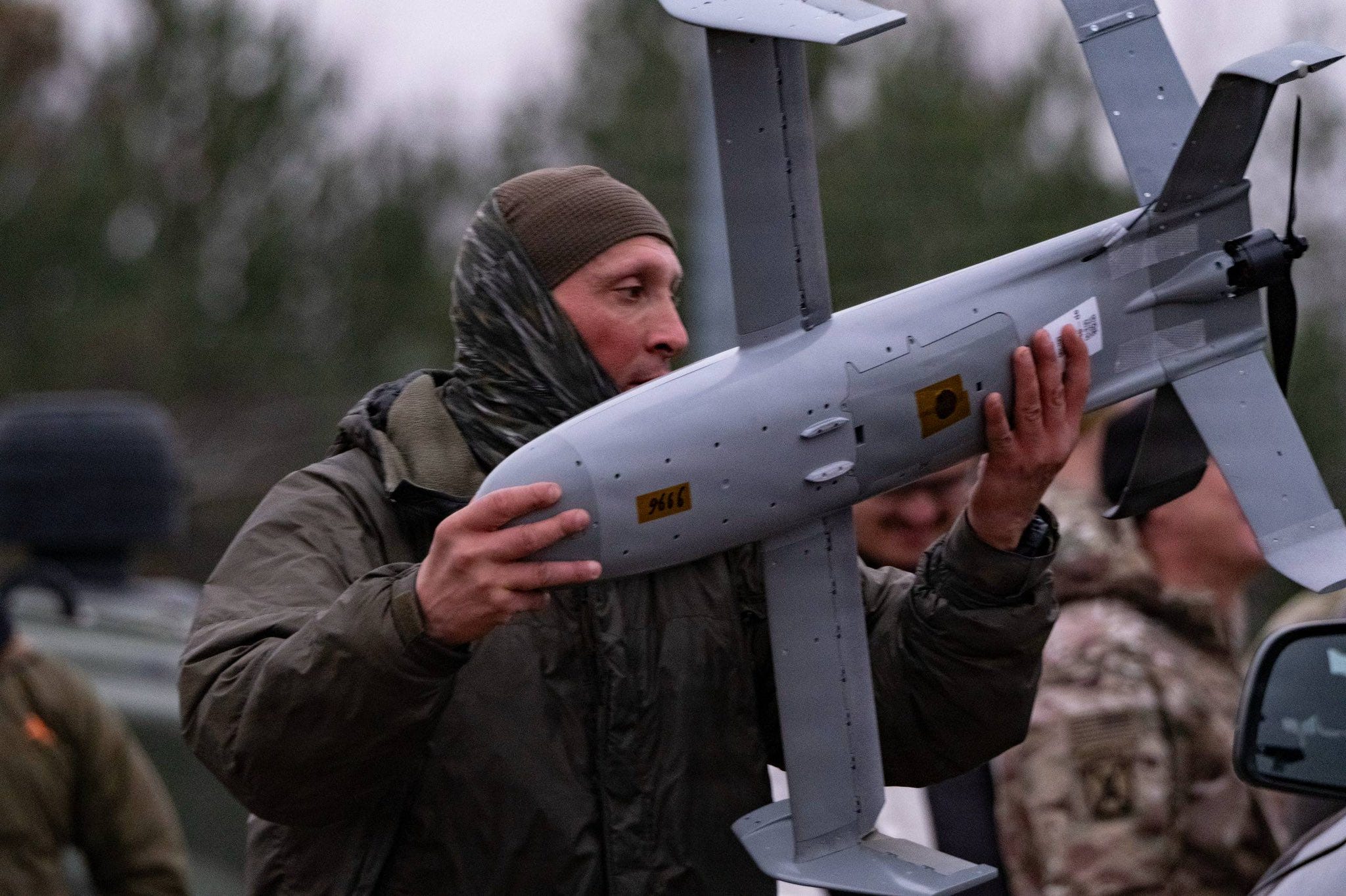
The drone unicorn (can you spot the duct-tape?): Merops drones during a training in Poland. Photo: MilitaryNewsUA on X
So far, “there’s already too much press about us” (a team member to the author of this article during a phone call) is as far as our knowledge goes. The first time the world got to see the fabled drones was during their deployment and training in Poland (our piece on the drones). What we know we know from second-hand sources, reported in the press:
“Favored by Ukrainian forces”
Around 300 km/h max speed
Radar both on the ground and onboard
Infra-red (IR) sensors onboard
AI for target lock
Proximity fuse
Cost: different spectra reported: “less than $10.000”, $7.000 when produced at volume (WSJ); $14.000-15.000, $3.000-4.000 when produced at scale (Driscoll), “under $20.000” (NYT)
While the airframe design is, its specs are nothing special. Radar, chips for onboard processing and AI models, as well as production in and sales to the United States could be the main drivers of the drones’ cost, which are between six and ten times higher than that of a Sting interceptor.

Happy times, different times? Eric Schmidt, Ukrainian Minister of Defense Rustem Umerov, and President Zelenskyy signing a memorandum on a long-term strategic partnership in mid-2025. Photo: Office of the President of Ukraine
The drones are being sent to the theater from US Army stocks in Europe, which will likely include some of the precious stocks in Poland the US Army, Polish and other NATO forces received and trained with last year, along with training personnel - both of which are desperately needed along Europe’s Eastern flank. This marks another significantly important asset being moved from a foreign theater to the Gulf region, after interceptor missiles got pulled from South Korea. Note: US Forces are reported to have begun training on the system in Bavaria only in January of 2026 (NYT). This leaves them significantly less time than a typical FPV interceptor pilot training, which takes three to four months. We don’t know whether their training was meant to be this short, or whether this is a mishap in planning for the operation, and we will likely never find out.
While the high level of secrecy around Merops and Project Eagle should be respected (and is respected by us), as it should be considered an asset to Ukraine’s defense, the world is likely in for quite a show, as these drones will be deployed to the Arabian theater, and used against Iranian drones, partly over Iranian territory, and likely will be captured by Iranians and its allies, and filmed by civilians. With some luck, it might even be possible for the open-source intelligence (OSINT) community to determine or approximate the veracity of the companies’ claims of autonomous intercept of Shahed-like drones, and their performance characteristics and features. Until we see proof that the drones are fully autonomous and don’t require pilots, we’ll be forced to assume they need at least some level of piloting. This is a crucial factor, as we’ll explain below.
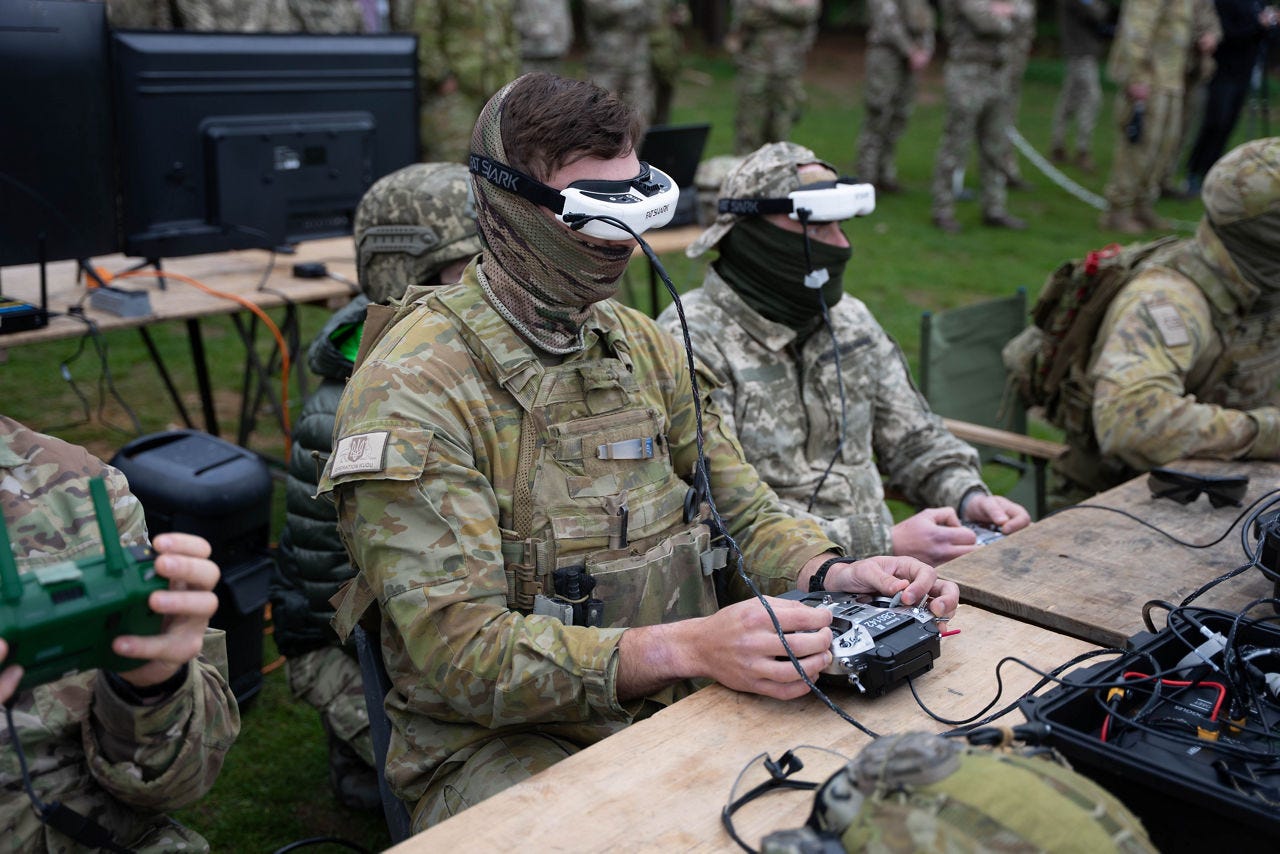
Drone pilot training. Photo: NATO
Trump Cards: Timing Is Everything
Secretary Driscoll said in an interview that the drones were sent within five days of the start of the operation on 28th of February. An “official” told the New York Times the other day that “thousands” are underway to arrive in theater “within the next few weeks”. It is unclear whether Driscoll’s statement pertains to all 10.000 Merops drones (or whether they are even all Merops drones), or whether they are expected to arrive in batches. If the statement is factual, this raises three core questions:
Why have we not seen deployment of the drones in photos, videos, and press releases? the drones are known to the world since the deployment in Poland, and the US DoD has so far not missed any opportunity to show strength by showing off (as have both sides of the conflict; as is the nature of war in the 21st century).
Why have we not seen evidence of successful intercepts of drones with Merops drones in the Arabian theater, not even civilian videos or photos, during a conflict where watching bombing campaigns while smoking shisha has become a normality?
If these drones were meant to be supplied to Ukraine, what does this mean for the defense of Kyiv and other urban clusters in the upcoming months?
There are other questions, mainly around supply chain resilience and production rate of interceptor drones, which are crucial factors to keep in excess of, or at least in lock-step, with the production of strike drones of the enemy in order to establish and maintain a favorable shot-exchange ratio.
Favorable Cost-exchange Ratio?
This has strong implications on the much-discussed cost-exchange ratio, which the US claims to be favorable with Merops drones. If a Merops drone costs $15.000, and we kindly assume that Iran has not been able to lower the cost at all, then Merops would not be cheaper than a Shahed if the intercept rate is only 1.5:1 Merops drones to Shaheds. What’s more, some of the parts contained in the Merops drone are in shorter supply. Those two aren’t even the most pressing issues for a country as rich as the US, as we’ll see below.
Other than Merops drones, the US is reported to be using RTX’s Coyote interceptors (similar to Anduril’s Roadrunner; also in their high price relative to Ukrainian interceptor drones and Merops) and Bumblebee V2, a more classic quadcopter-airframe design with a proximity fuse which was purchased by the Army via the Defense Department’s Joint Interagency Task Force 401 (JIATF), also made by Perennial Autonomy. On average, we don’t expect any of the drones to tilt the scale in favor of the United States when it comes to defense-economic considerations.
Questions?
Answers. Better call Marc!
More about Marc.


A clear no: “”No, we don’t need (Ukraine’s) help in drone defense,” Trump said in the interview. “We know more about drones than anybody. We have the best drones in the world, actually.”“.
Quote from an article by the Kyiv Independent
Not With Ukraine
So far, neither the US nor Ukraine have confirmed purchases or deployment of Ukrainian-made interceptor drones, despite lots of press about Ukraine now having the famous “cards” Trump once told Zelensky he doesn’t possess. Given the statements made by the US president on March 13th and 14th, it doesn’t seem that this is going to change anytime soon:
“Trump doubled down on his comments rebuffing Kyiv’s offer on March 14, telling NBC News in a phone interview that “the last person we need help from is Zelensky.”“
Quote from the Kyiv Independent article linked above.
AI Vs. Ukrainian Tech
Ukrainian interceptor pilots train for an average of four months, and the ones that hit the 5:1 intercept ratio, have thousands upon thousands of real intercept flight hours under their belt.
Speaking at the MITS x Azov Corps: Defense Technology Horizons 2026 conference in January, Yurii Fedorenko, commander of the 429th Separate Unmanned Systems Regiment, said becoming an effective drone pilot requires months of experience. “Everyone knows that a pilot is trained for four months, and with every sortie he becomes better,” “There is no final level a pilot reaches to become an absolute guru.”
We used the term munition above. That obscures part of the reality of these vehicles: Interceptor drones are piloted munitions, and, for now, automation (”autonomy”) is still evidently low enough in terms of reliability or closing the kill-chain for Ukraine to keep holding onto its small army of pilots.
Has Merops cracked the code of autonomous intercept at scale and cost? We sincerely hope it has. The US’s strategic calculus hinges on this decisive question. In the breakdown below, we take an educated guess at what it would mean if the US falls short of the ability to operate the drones with minimal pilot training and operational manpower, and to build and deploy thousands of them per month.
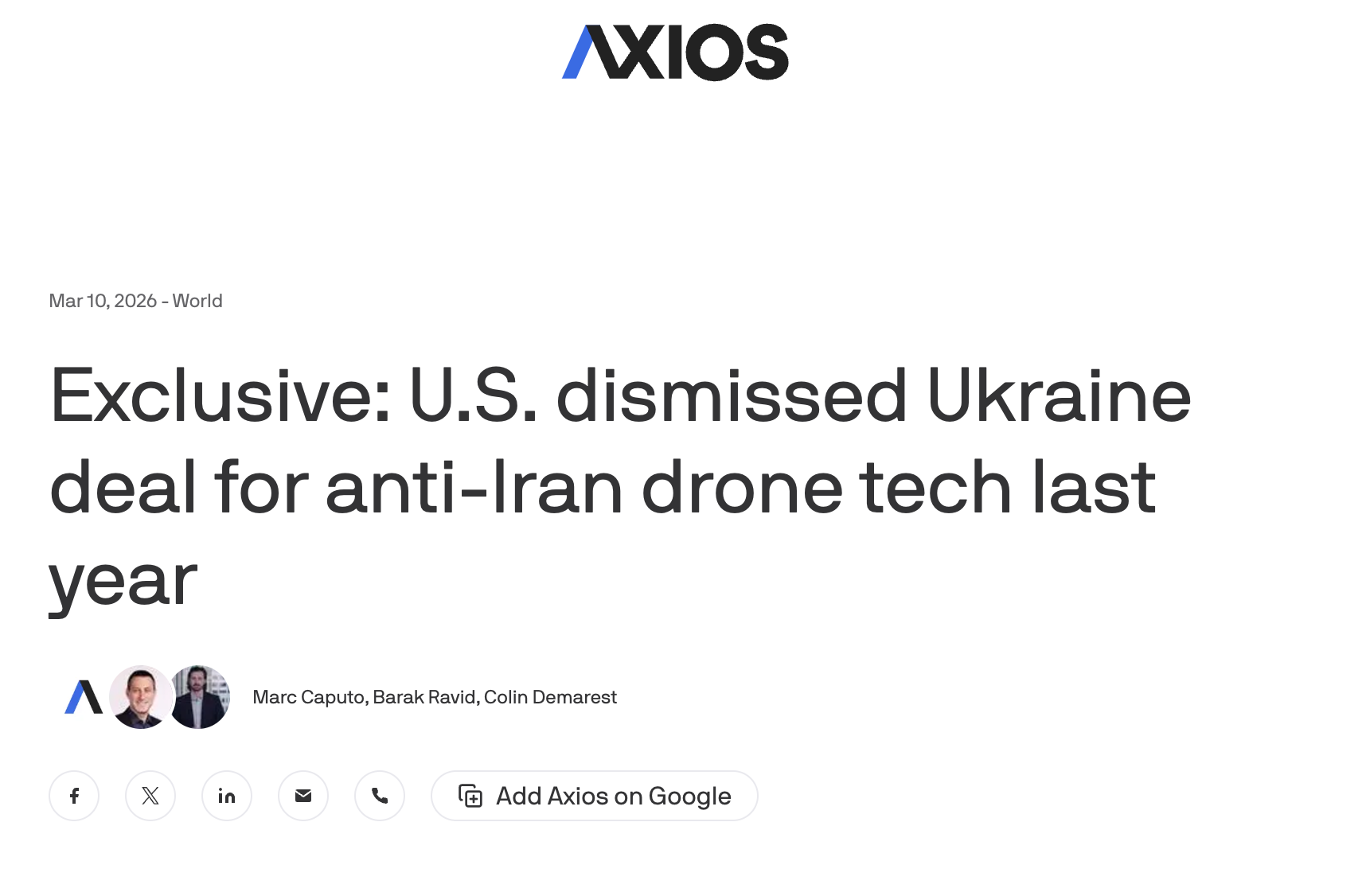
According to Axios, the Washington had dismissed Ukraine’s offer to help with defense against Shahed-like drones last year.
What Ten Thousand Interceptors Get the US
10.000 Interceptors
Total number, highly unlikely that these arrive at once or anytime soon, but let’s be extremely forgiving in our calculation and assume that the full number arrives soon and can be deployed rapidly.
8.000 Interceptors
Discounting interceptors expended during training, lost at sea, human operations in desert conditions (sand storms, visibility, extreme temperatures).
6.400 Interceptors
If we account for the fact that even in the most elite units of the Unmanned Systems Forces, five to one is still the average, with Ukraine producing closer to 13:1 interceptor drones to successful intercepts of Shahed-like drones (our internal calculation based on recent data). Merops is rumored (advertised? It’s impossible to know) to flip the five-to-one-ratio onto its head, claiming an 80% intercept rate due to its alleged superior automation, with peaks of “up to 95%“ reported but not documented with evidence. A set of key questions this number, combined with its claims of autonomy, raises is that, if the claims are anywhere near true and the producers are in a good relationship with Kyiv:
Why Ukraine has not tried to purchase many orders of magnitude more of the interceptors.
Why it has not tried to reverse-engineer or catch up with their development.
Why the appearance of Merops has not yet transformed the Ukrainian battlefield and its Unmanned Systems Forces the way a truly transformational technology is expected to do.
5.000 Interceptors
Being gracious here. Subtracting about a quarter more due to semi-autonomous or autonomous operation against different drones than the ones Merops are usually used to intercept (Iranian Shaheds are not exactly the same as Russian ones, and there is a far greater variety of different mid- and deep-strike drones being produced by Iran) within an unforgiving and (to the drone) unknown theater, and not always during nighttime (as Russian strike waves are almost exclusively at nighttime).
It Likely Gets Way Worse
These are just a few of the factors we didn’t account for in our estimate:
Loss during transportation: This is the first large shipment of interceptor drones in history, drones consist of many parts, some harder, some more flimsy, they are unlikely for being designed to be shipped via air and sea, and need to be logistically handled and dispersed throughout the US’s bases across the theater.
Loss due to mishandling.
Loss due to Iran hitting supply or storage.
Malfunction and/or lack of availability of parts (rotors, battery packs).
Can the US Make Enough Interceptor Drones On Its Own?
It’s impossible to estimate the actual number of successful shots the US and its allies will be able to land using interceptor drones, but we hope that this simple estimate and the contributing factors help drive home one important point: The amount of successful shots could be well below half of the monthly Iranian drone production level. It remains to be seen:
How rapidly Perennial Autonomy and other (likely less automated/autonomous) drone suppliers can ramp up production fast enough,
How rapidly the US and Israel can degrade Iran’s production and launch capabilities as well as its stockpiles,
What Israel’s contributing role to the drone war (as one of the world’s preeminent drone expert countries) can enable,
How well the US’s unmatched logistics capabilities are suited for handling thousands of small drones on top of all other logistics demands,
And how rapidly the US can implement operational training and plug the potential holes in manpower the redeployment of troops for interceptor drone operation creates in the current force structure deployed to the Iranian theater.
Too Little, too Early
If we ignore the fact that, as of the time of writing, Merops drones have yet to be sighted or documented intercepting Iranian drones anywhere in the Gulf theater, and if we take Secretary Driscoll’s word for it that they have been deployed within five days of the 28th of February, which means that any number of them should have arrived by the 5th of March, then this raises two very important strategic questions:
Why have the drones, which seem to have been sitting around in storage (given that they could be deployed almost instantaneously), not been pushed into the theater earlier, in preparation for the offensive?
Are the drones and their machine learning models, extensively trained on data from the Ukrainian theater (which is very different to the Iranian one; night-and-day different) ready to perform at a high grade of autonomy and high success rate, even against drones they have never been used against or seen an intercept FPV video feed from?
The drones have likely been trained on a variety of drones beyond the ones used in the Ukrainian theater, and it is similarly likely that they have been trained on synthetic (computer-generated) data as well, for example to simulate different conditions. It is also highly likely they are employing a combination of static computer vision algorithms and dynamic machine learning models on top of their sensor fusion in order to detect, track, and lock onto threats, including ones they aren’t trained on. However, as is the case with many new defense capabilities, only field use in local conditions will tell whether Merops is ready to perform as good as claimed in Ukraine against, e.g., Iranian operational flight tactics for Shahed-101s.
Trade-offs: No Shortcuts, Only Cuts
As we have discussed in detail in “Are Interceptor Drones Worth the Hype“, these new munitions are neither mature, nor a panacea against drone threats, but to be understood as one layer of integrated air and missile defense (IAMD), and an experimental one at that. All well-known interceptor drones rely on highly skilled personnel for successful deployment, maintenance and use, and none of the drones about which we know about claims fully autonomous intercepts of any drone, Russian or other.
Production of advanced interceptor drones, fielding by the thousands, and training and operation by ground staff requires time. Especially in terms of training, a tight bottleneck might or might not exist, depending on the amount of training necessary to operate Merops and other potentially highly advanced drones. If the drones require substantial training and operational manpower, and if Iran can keep up its estimated high drone production (and/or has sufficient stockpiles), the US might be in for a continued rough ride.
Then again, the US might not have any options if it doesn’t want to leave Iran without achieving its most important stated goal of regime change and dismantling of its ability to harass allied countries in the region like Israel. There is simply no way the United States can ramp up production of other means of intercepting potentially tens of thousands of drones, and no other air defense solution which is as integrated, and thus as easily deployable to its own installations, allies, and friends, as the interceptor drone.
Drone Success Is Built Not Bought: What to Do Now
The Iran war could well be viewed by future historians one of the most costly operations in the history of the United States and Israel. We mean this not strictly limited to money, though if the first two weeks are any indication, that’s true as well. We mean this in terms of lessons learned.
The United States did not enter this conflict expecting Iran’s ability to strike targets at a distance to be this strong after its initial air campaign. It did not expect the number and types of targets Iran would strike successfully, and it did not expect Iran to successfully factually close the Strait of Hormuz. It didn’t expect the Iranian people to abstain from trying to topple the government, and, crucially, it did not expect to need to supply thousands of interceptor drones to the theater. If these drones have been sitting in storage (which must be the case if they can be shifted to the theater rapidly) and the US would have anticipated this level of adversarial drone action, then the deployment of far more interceptor drones to the Gulf would have taken place before the start of the war.
While there is no reason to talk down the immense air power, lightning-fast and precise decapitation and strategic strikes, and sustained, clockwork-like dismantling operation the United States and Israel are performing, there is reason to caution the US and other nations once again about the (unfortunately still to many) surprising power of dispersed, affordable, easy-to-build and -operate unmanned systems. A lot will depend on the performance of the US’s Merops and similar interceptor drones and their operators during the coming weeks. We will be watching closely, as a verdict whether it was a smart, or even an affordable, move of the US administration to dismiss the offer of Ukraine’s government to help defend itself from Iranian drones, will likely be reached.
It is impossible to predict how the war will continue or end. Heck, in 2026, it seems impossible to predict what will happen on the global stage a day from now. One thing, however, is certain, and that is that whoever wants to defend themselves against a major drone power, or credibly deter against a potential major drone power aggressor, needs to demonstrate the ability to build and rapidly deploy not just thousands but tens of thousands of reconnaissance, (deep) strike, and interceptor drones per year, at cost - each. The only nation that can teach the world how to do so is Ukraine. So far, going by evidence (e.g. procurement data) it seems that no Western nation has learned the lessons of the COTS revolution in unmanned systems and affordable strike. EU, NATO, and allied Nations have little time left to turn entrepreneurial zest into high-RPM iteration and production engines.
What they do have, now, are not one but two pieces of clear evidence that the only alternative to developing strong markets with healthy competition that produce and iterate unmanned solutions at scale and variety are the only way towards meaningful rearmament, and the only path towards credible deterrence, for which the book may have just been rewritten:
Welcome to the age of Survivable Second Drone Strike.
💪
If you enjoyed this article, we recommend our Deep Dive on the missing answer to the Shahed (with lots of suggestions) and the Arash-2 (same) next:
Questions?
Answers. Better call Marc!
More about Marc.
Disclaimer
This article represents the personal opinion of the author, is neither political, nor financial, or legal advice. Like AI, we make mistakes when researching our articles. Let us know, and we’re happy to correct them.
Final 24h of 50% off on subsciptions; opening up the page for everyone. Only as long as supplies last: https://techwars.substack.com/subscribe?coupon=d5f4ed4e
What allows you to make these statements so convincingly (your paragraph below)? The conflict was so thoroughly war gamed in advanced, this had to be calibrated as an acceptable event (targets at distance). Again, all the wargaming variations would have covered these targets (breadth of targets). There hasn't been any surprising targets chosen. They were all logical. Closing the Straight would have been 100% gamed in 500 different ways. The Iranian people were not expected to topple the gov during the bombing phase. It would be wise to delay this judgement until the actual phase of populous activism begins. Supply strategies would have also been gamed extensively. All contingencies considered. The supply event should be judged on how swift it was, from where it came, and what it implies about the next provision, rather than simply labelled "unexpected" without proof of such claim. And finally, with drones less lethal, knowing reduction to zero tolerance impossible, they were surely dimensioned as a risk, a tolerance level established, and then matched with a war-gamed strategy. Your reports are so incredibly thorough and insightful, you know your tech extremely well, I don't understand the desire to take short cuts and label everything "unexpected, unprepared, unanticipated." All the outcomes to date have been pretty predictable, they would have been covered in first round war gaming. Your surprise seems misplaced.
The United States did not enter this conflict expecting Iran’s ability to strike targets at a distance to be this strong after its initial air campaign. It did not expect the number and types of targets Iran would strike successfully, and it did not expect Iran to successfully factually close the Strait of Hormuz. It didn’t expect the Iranian people to abstain from trying to topple the government, and, crucially, it did not expect to need to supply thousands of interceptor drones to the theater. If these drones have been sitting in storage (which must be the case if they can be shifted to the theater rapidly) and the US would have anticipated this level of adversarial drone action, then the deployment of far more interceptor drones to the Gulf would have taken place before the start of the war.