

Off the Trigger - TECH WARS Briefing - Week of 8th of June 2026
This week a US sea drone fished two pilots out of the Gulf, Ukraine’s interceptors began flying themselves, and the strikes reached St. Petersburg.

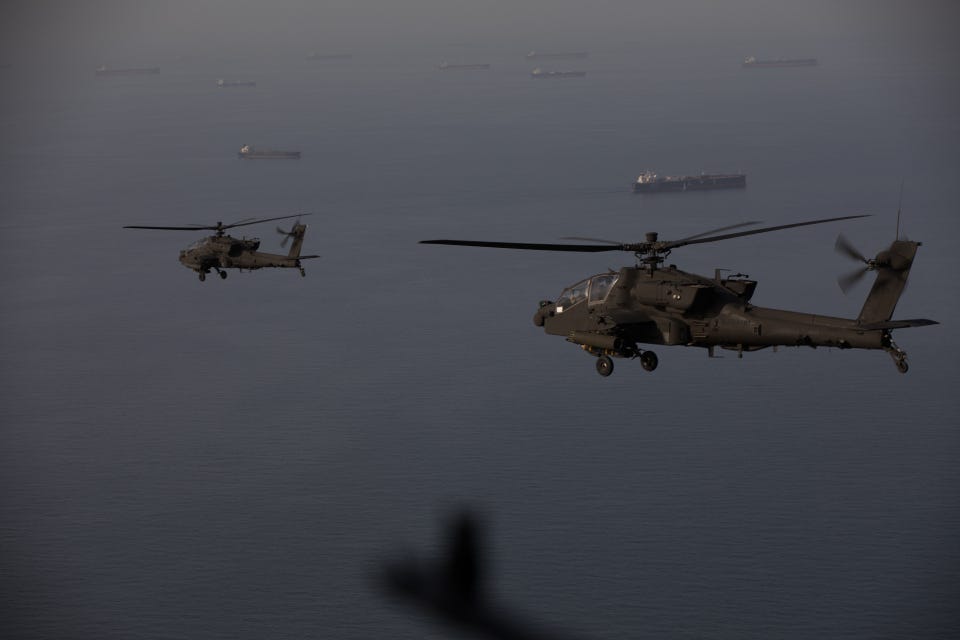
AH-64 Apache helicopters (still my second-favorite gunship after the Commanche, fight me) on a patrol over the Strait. CENTCOM
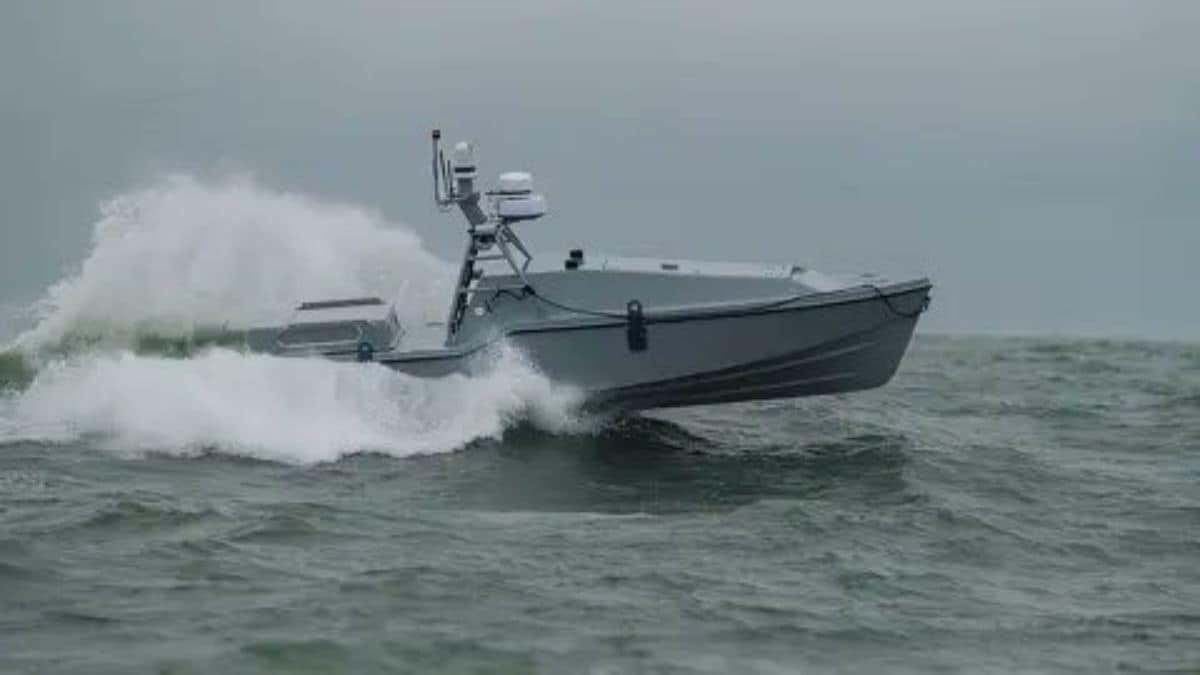
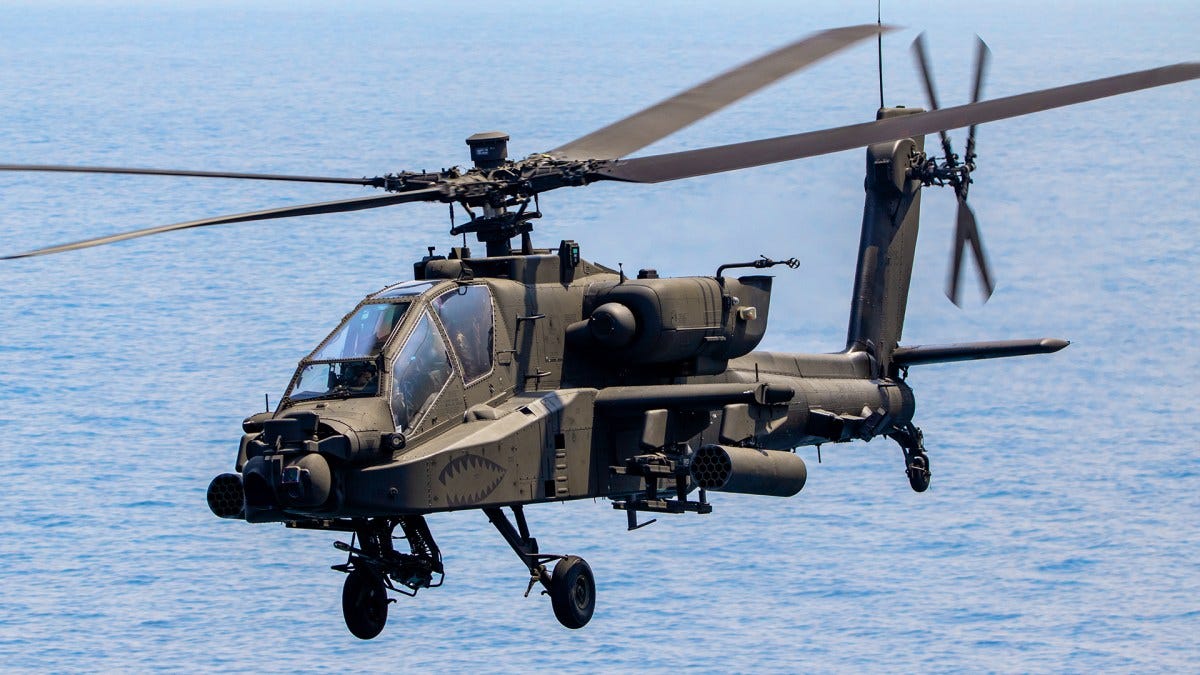
Two US Army pilots spent about two hours in the Gulf of Oman on 8th of June after their AH-64 Apache went down near the Strait of Hormuz. What reached them first was not a helicopter or a crewed rescue boat. It was a Saronic Corsair, an unmanned surface vessel with half the payload capacity and double the visible hull above-water for three times the price of a Magura, that Task Force 59, the US Navy’s drone unit in the region, only began operating in March. CENTCOM said the cause was under investigation, and President Trump said Iran shot the helicopter down. Officials called it the first time a sea drone has recovered downed aircrew in a search-and-rescue mission (The War Zone, Washington Times, 9th of June). It was the most novel MEDEVAC use anyone put an uncrewed system to all week. The rest of the week was the usual work, and some new work. Some very new work. At the end of this Tech Wars Briefing I’ll tell you what downed that helicopter. I’m not promising too much when I say that it’s actually pretty shocking.
TACTICS & INNOVATIONS
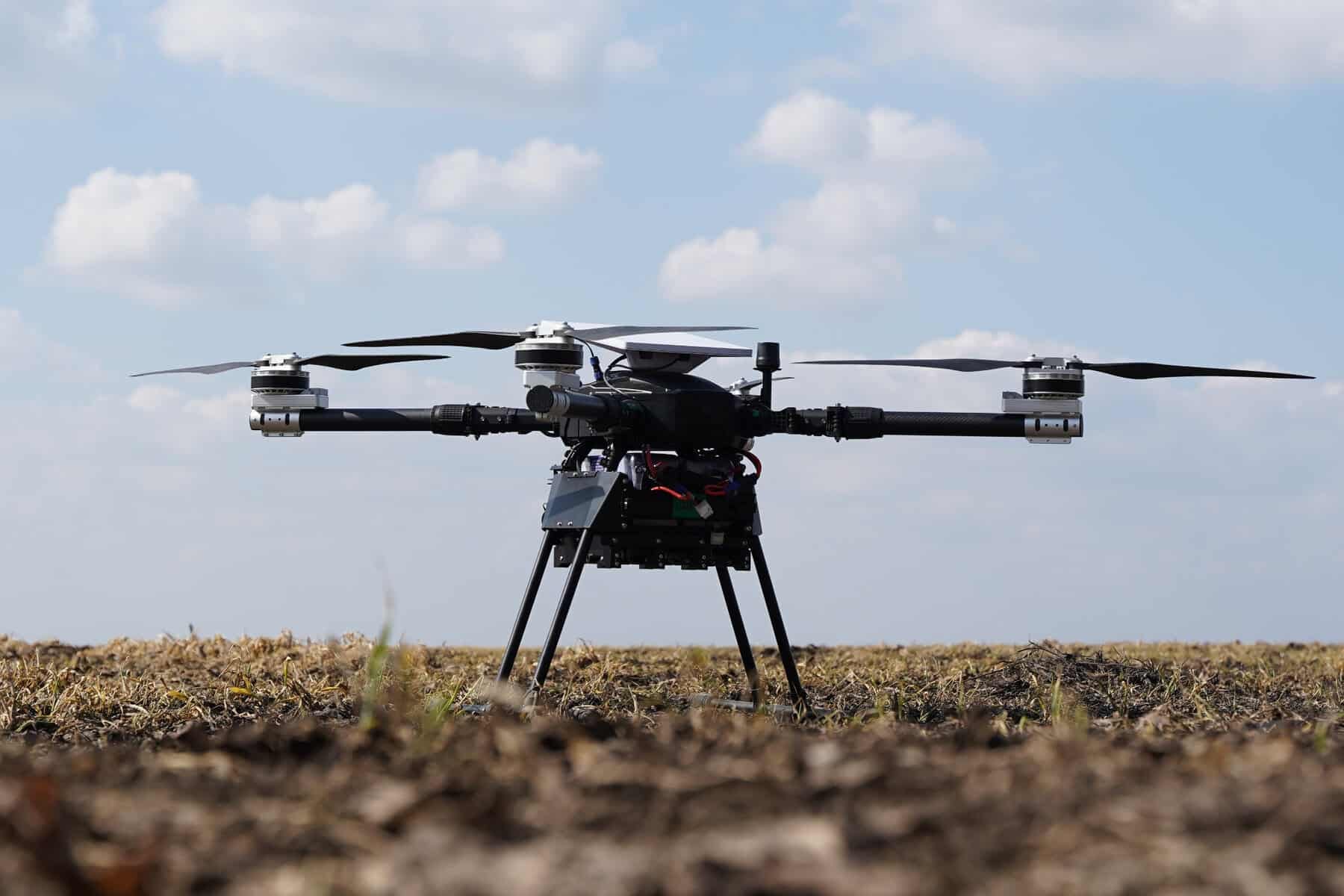
You can now fly the bomber from the other side of the planet. Martyn Tech unveiled the Adis, a heavy-lift strike drone controlled over a commercial satellite link (*cough, fragile Starlink dependency, cough*) rather than radio, which takes the operator off the radio horizon (Militarnyi, 3rd of June; Ukrainska Pravda, 4th of June). It carries roughly 10 kilograms to a combat radius of about 20 kilometers, was tested at approximately 12 kilograms over 20 kilometers and 3 kilograms out to 50 kilometers, with an endurance of around an hour, and it is already codified on the Brave1 marketplace. The heavy bombers of the Vampire class keep the operator within a few kilometers of the target, and that operator is the single most-hunted node in the system. Put the control link on a satellite and he can sit in another country. I have explained how this works in detail in Far-Person Vision.
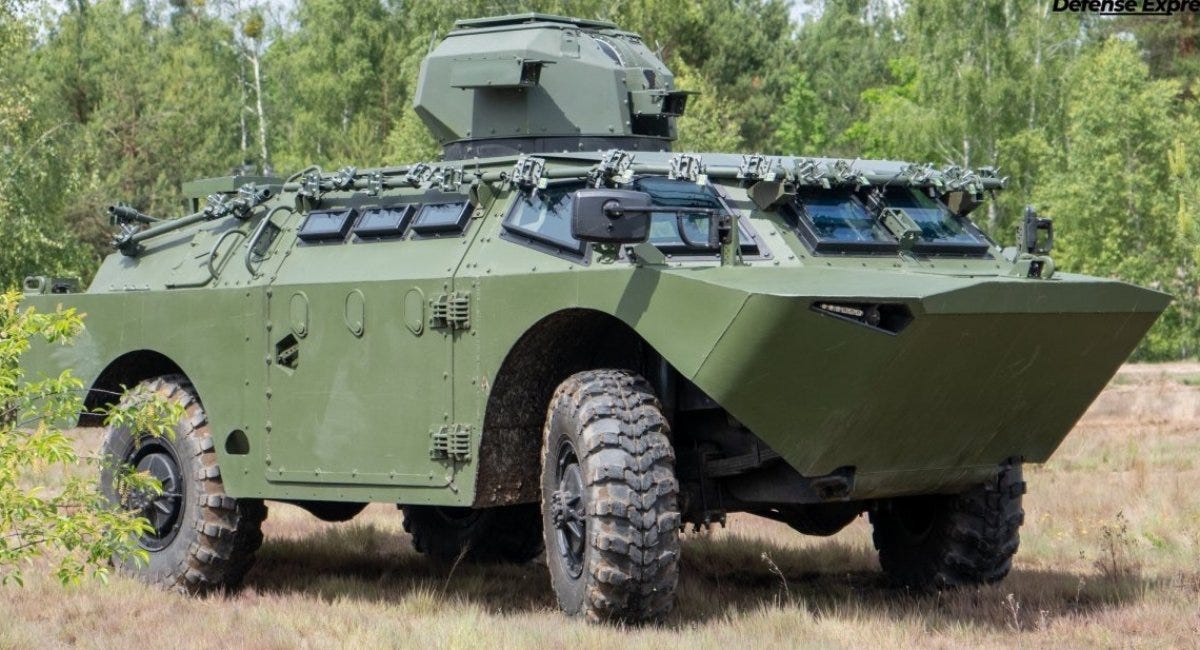
Active protection is moving onto the vehicle itself. ArmSpecTechnology fitted a BRDM-2M scout vehicle with what it calls Ukraine’s first hardware-tested active protection system (APS) against FPV drones, and it’s not what you (Rheinmetall, Hensoldt, your favorite Prime) think: roughly 32 net launchers spaced around the hull, camera-cued, firing a net to tangle an incoming drone before impact (Defense Express, 4th of June). Until now, vehicle defense against FPVs has meant cope cages, slat armor and electronic warfare, all of it passive or jamming-based, or extremely expensive APCs that are hard to refill in the field. A net that physically catches the drone does not care whether the FPV is radio-controlled or running on fiber. No reaction-time or detection figures were released. But you can bet your bottom Euro that you can refill that thing while on the go.
Russia is firing Shaheds about as fast as it builds them. Serhiy Beskrestnov, the Ukrainian MoD adviser who goes by Flash, reportedly says captured Gerans now carry manufacture dates only 5 to 15 days before they are launched, and puts Russian output at roughly 404 a day (UA.News, 5th of June). Set that against the Iskander stock he describes, on the order of 180 to 250 missiles held in reserve (those are for the EU, obviously). So where does the Shahed reserve sit? Almost nowhere. Russia is launching them straight off the line, which means the production plant, not a warehouse, sets the size of the nightly salvo. That is an argument for hitting the plants. At least as much as it was at the beginning of the war when Europe denied Ukraine long-range ordnance only to see the ROI on that investment turn negative. Oh, wait…
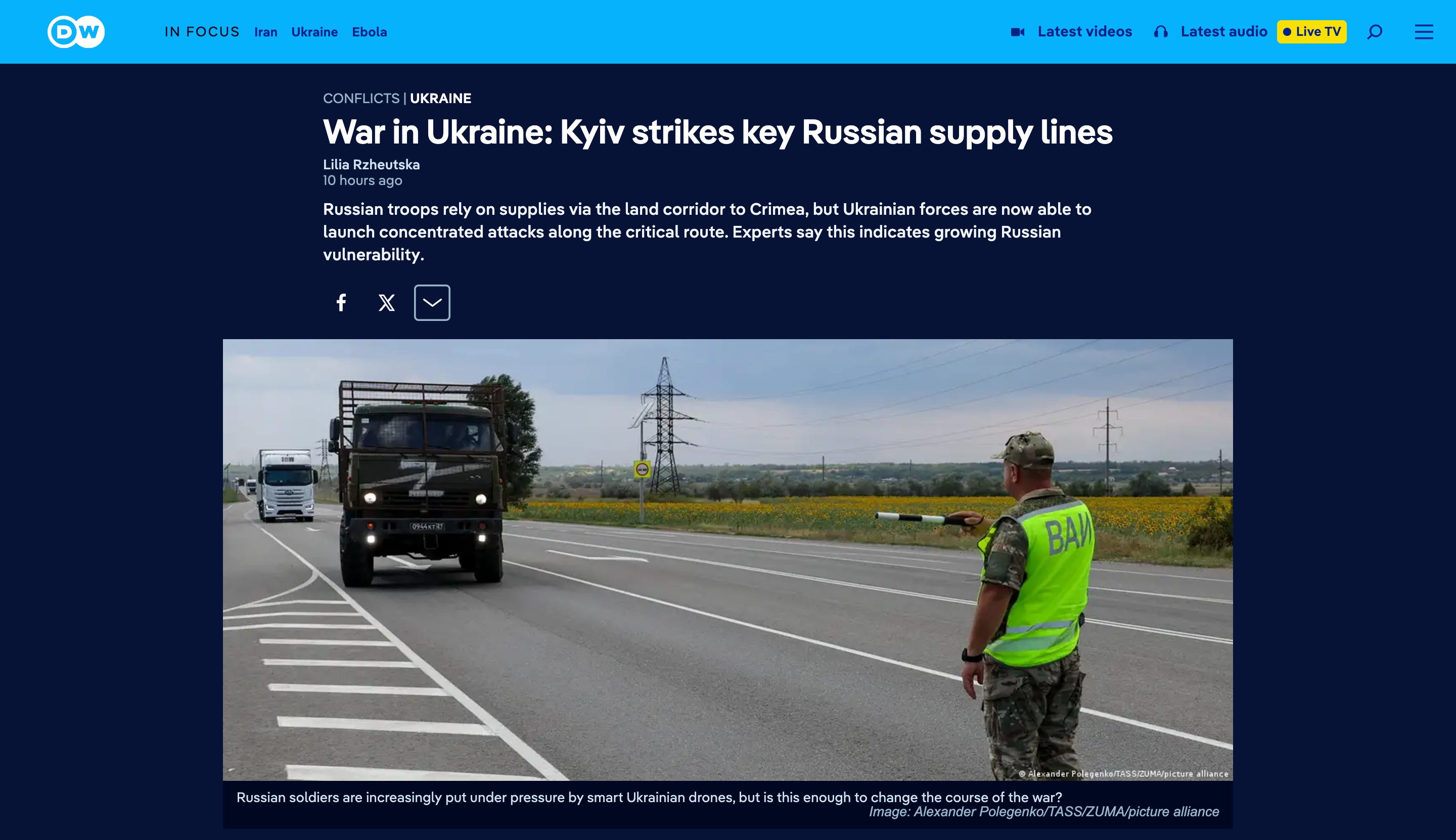
The kill-zone is being drawn over a supply road. Ukraine’s Special Operations Forces say they have established persistent drone control over the Melitopol to Chonhar corridor, one of the two main overland routes into Crimea, with the 3rd Separate Special Purpose Regiment working the road (Defense Express, 7th of June). No interdiction figures were given. The pattern: a short-range kill-zone stretched until it sits permanently over a main supply route into Crimea. That’s more important in relation to the 2.4 million inhabitants getting angry than the military stationed there, which can call dibs on fuel. And it is a testament to Ukraine’s stubborn, focused rage towards a goal. About a year ago, my Ukrainian defense contacts told me that mid-strike is the goal, and the result is degraded and slowed resupply, thinner air defenses. Ukraine putting the Russian support area on lock-down. I’d start a tirade about procurement, but you’ve read me write about that in every other piece. Much rather, I’ll share a teaser: the second part of The Three Developments Pushing Autonomy will be about mid-strike. Exciting!
Number of the week: Ukraine’s MoD cleared 175 new systems for service in May, around 60 of them drones and roughly 93 percent Ukrainian-made (GlobalSecurity, 1st of June). That’s about 175 more than most EU governments.
INTERCEPTOR UPDATE
The week’s most-watched clip was an interceptor running down a Shahed over Kharkiv with nobody flying it. MaXon Systems says its drone closed roughly 95 percent of the engagement by itself, from launch through tracking to the hit, with the operator only authorizing the run and keeping the option to call it off. The unit costs about 3.500 USD, and one crew, the company says, can put several up at once and let the system divide an incoming group between them. The combat test was run by a Special Operations Forces unit in the Kharkiv region (Militarnyi, 8th of June; Defence Blog), and, disclaimer: it contained autonomy kit by a company that’s in a program I am fortunate to co-run at the moment.
In Are Interceptor Drones Worth the Hype? I argued that the interceptor is really a piloted munition, and that the bottleneck is the pilot. Ukraine has kept its small army of interceptor pilots precisely because the automation was not yet reliable enough to close the kill-chain on its own. An operator who can run several intercepts at once is how you break that bottleneck, which is why this clip matters more than the next speed record (though still impressive; see below). Mykhailo Fedorov says the share of Shaheds killed by interceptor drones has doubled over the past four months, while Russia raises its launch volume by about 35 percent a month. The harder number is the monthly tally: Ukraine’s MoD reports downing 91,73 percent of incoming drones in May, 7.476 of 8.150, against a stated goal of 95 percent (GlobalSecurity, 5th of June).
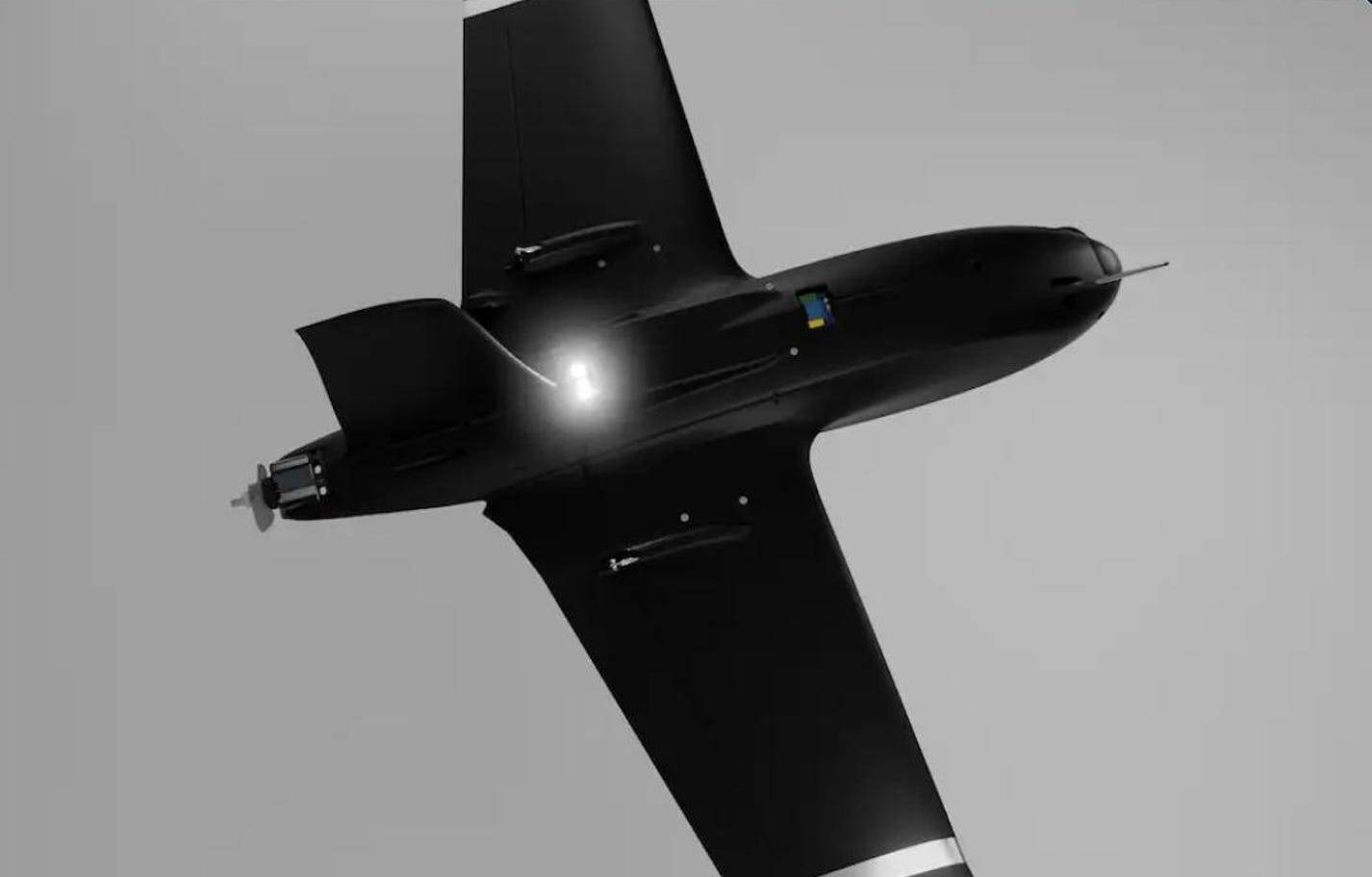
The threat is not waiting. General Cherry and STRIX have added a chemical accelerator to the Bullet interceptor specifically to chase the jet-powered Geran-4 and its roughly 500 kilometers per hour (thedefender.media, 4th of June; Euromaidan, 5th of June). The base Bullet does about 310 kilometers per hour at a unit price of roughly 750 to 1.400 USD, against a Geran that costs tens of thousands, so the cost-exchange still runs hard in the cheap side’s favor. None of this has been shown at the scale that matters, yet, and SRMs cost resources, time and money (Iran can attest). Whether the autonomy holds across a 600-drone night, flown in bad weather, is the open question, and that evidence does not exist yet.
DEEP-STRIKE UPDATE
Ukraine to Russia. The “falling debris” campaign reach kept extending. On 3rd of June, as the St. Petersburg International Economic Forum opened, Ukrainian drones flew roughly 1.100 kilometers to hit a St. Petersburg oil terminal and the Kronstadt naval base. Ukraine’s General Staff says the corvette Boikiy, a Project 20380, was struck in dry dock; the refinery fire was confirmed by satellite (Kyiv Post, CNN, 3rd of June). On 8th of June the targeting shifted from refining to the export chain, with the Sheskharis and Grushevaya oil-export depot at Novorossiysk, storage on the order of 1,4 million cubic meters, set ablaze along with a pipeline dispatch station at Krasny Yar (Kyiv Independent, 8th of June). On 9th of June, SBU drones reached the Kapotnya refinery inside Moscow itself; Mayor Sobyanin acknowledged 12 injured among construction workers, and the impact was corroborated by the ASTRA monitoring channel (Militarnyi, 9th of June). Satellite analysis also confirmed an earlier strike on Shagol airfield near Chelyabinsk, roughly 1.700 kilometers out, reportedly damaging several Su-57 and a Su-34 (Militarnyi, 9th of June). The hit dates to late April, so read it as confirmation arriving this week rather than a fresh strike. At 1.700 kilometers, it is the deepest reach Ukraine has shown.
Russia to Ukraine. Russia spent the week building towards outrunning the cheap interceptor. GUR published a full profile of the Geran-4, the jet-powered Shahed: roughly 400 to 500 kilometers per hour, a ceiling near 5.000 meters, a range of about 450 kilometers, a 50 to 90 kilogram thermobaric warhead, and a Chinese Telefly turbojet, built to outpace Ukraine’s roughly 2.000-dollar interceptors. This is the cost-exchange-speed pressure I traced in Are Interceptor Drones Worth the Hype?, now wearing a jet engine. A Wild Hornets STING brought down the first confirmed one (Euromaidan, 4th of June). Commander-in-Chief Oleksandr Syrsky says Russia intends to push jet-powered drones to half of its salvos, and that Ukraine downed more than 3.500 of them in May (Kyiv Post). On 7th of June a strike damaged a spent-nuclear-fuel storage building roughly 15 kilometers from the Chornobyl plant, on a night of 236 drones launched and 215 intercepted, with the IAEA saying it would inspect (Al Jazeera, 7th of June).
The drones that get through keep killing civilians in Kyiv and Dnipro, the way they do most nights, and I will not let that read as a row of figures. This is a sustained campaign of terror against a civilian population, and it is worth saying so every time. The people holding that line need more than our outrage. The Roxolani Foundation, whose board I sit on, does the unglamorous work that keeps front-line units alive: MEDEVAC and stabilization support, where a single evacuation vehicle is reckoned to save 30 to 40 lives, anti-drone netting, generators, thermal kit, comms gear, and the rehousing of more than 2.000 refugees. Its founder, Ryan Grant Little, moved to Ukraine full-time to run it. It converts about as directly into survival as money can: roxolani.org/donate.
DRONES AROUND THE WORLD
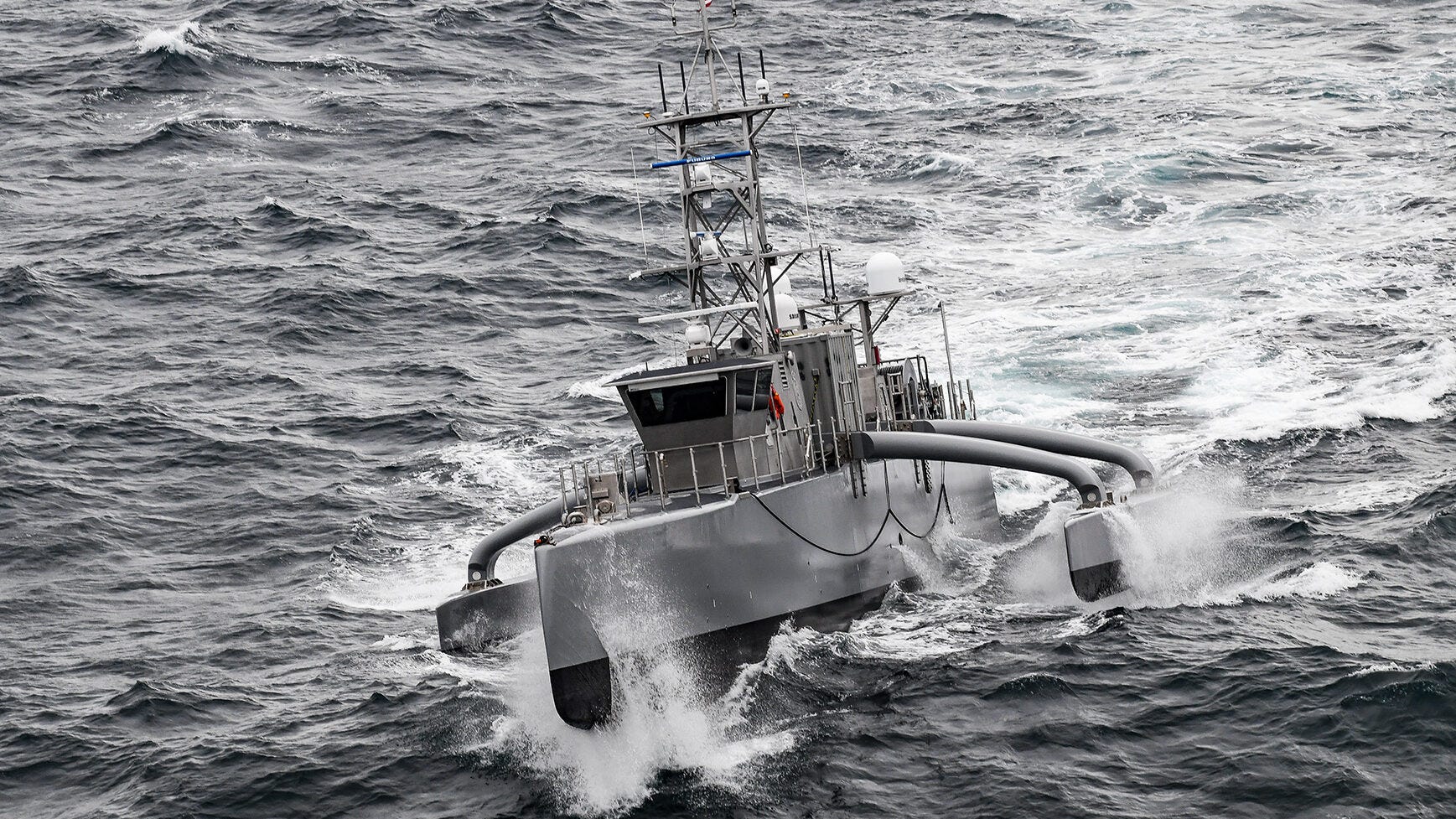
A US unmanned warship is about to sail with a carrier. The Seahawk medium unmanned surface vehicle (MUSV) is set to deploy as part of the USS Theodore Roosevelt carrier strike group, the first time a US unmanned surface combatant goes to sea as an organic piece of one, inside a Navy plan to grow from 4 to 30 of these in the Indo-Pacific by 2030 (Breaking Defense, 4th of June). The Navy declined to say how it will be used, which tells you the concept of operations is still being written. Congress is now legislating tempo: the House version of the FY2027 defense bill orders a Navy-wide unmanned surface vessel master plan, due 210 days after enactment, and defines small USVs as those under 50 metric tons and 15 meters (Defense One, 7th of June).
The deadliest place to be under a quadcopter outside of Ukraine might be a market in Sudan. Drone strikes across North Kordofan killed at least 16 civilians this week, 11 of them in a single hit on the Abu Zaima market on 6th of June, according to the Emergency Lawyers rights group (Al Jazeera, 6th of June; allAfrica, 7th of June). Wherever the cheap unmanned layer turns up, the civilian toll arrives with it, and Sudan keeps proving that the technology needs no front line to do its worst.
Also: UFORCE confirmed this week that the Magura unmanned surface vessels that sank a target ship off the Philippines during Balikatan were the same family that hunted Russia’s fleet, though that exercise strike was back in April (Defence Blog, 8th of June).
MARKET SIGNAL
One item, because it is about timing rather than money. AeroVironment landed the first bulk-production order for its P550 reconnaissance drone, 117,3 million USD for 82 systems, with delivery targeted for July (ClearanceJobs, 4th of June). Look at the delivery clause rather than the contract value. The US Army is buying battalion-organic ISR on a near-commercial timeline, weeks rather than the multi-year acquisition cycle that has defined Western procurement. That’s the habit Ukraine has been forcing on everyone watching.
So, what downed that Apache. A Shahed? No, really? No, really! It’s (strongly) questionable whether which model and whether it deliberately struck the gunship, and if so, how it was even able to do so. Below a jet-powered 238, I don’t see the ability to do this out of sheer luck. That is, if this ain’t another one of those cases where a 359 gets mistaken for a Shahed. You’d forgive it the Western defense officials; so far they haven’t been all that good at learning from their enemy. Like the platform engineering and parts sharing with the Shahed that make this world’s first loitering missile tick.
The scarce input in this war keeps moving. It was airframes, then trained pilots, and this week both sides spent their effort on the pilot: Russia on a drone too fast to catch by hand, Ukraine on an interceptor that needs no hand to fly it. Whoever removes the human from that loop first, at cost, and keeps the kill, sets the price of what comes next. I traced how Ukraine got to lead this fight in Ukraine’s Long Arm.
If you read this far, reply and tell me which of these you want followed next week. And if the work is useful to you, a free or paid subscription is what keeps it coming.
Recent deep dive: Ukraine’s Long Arm: How Kyiv Overtook Moscow in the Deep-Strike War.
Ukraine’s Long Arm: How Kyiv Overtook Moscow in the Deep-Strike War
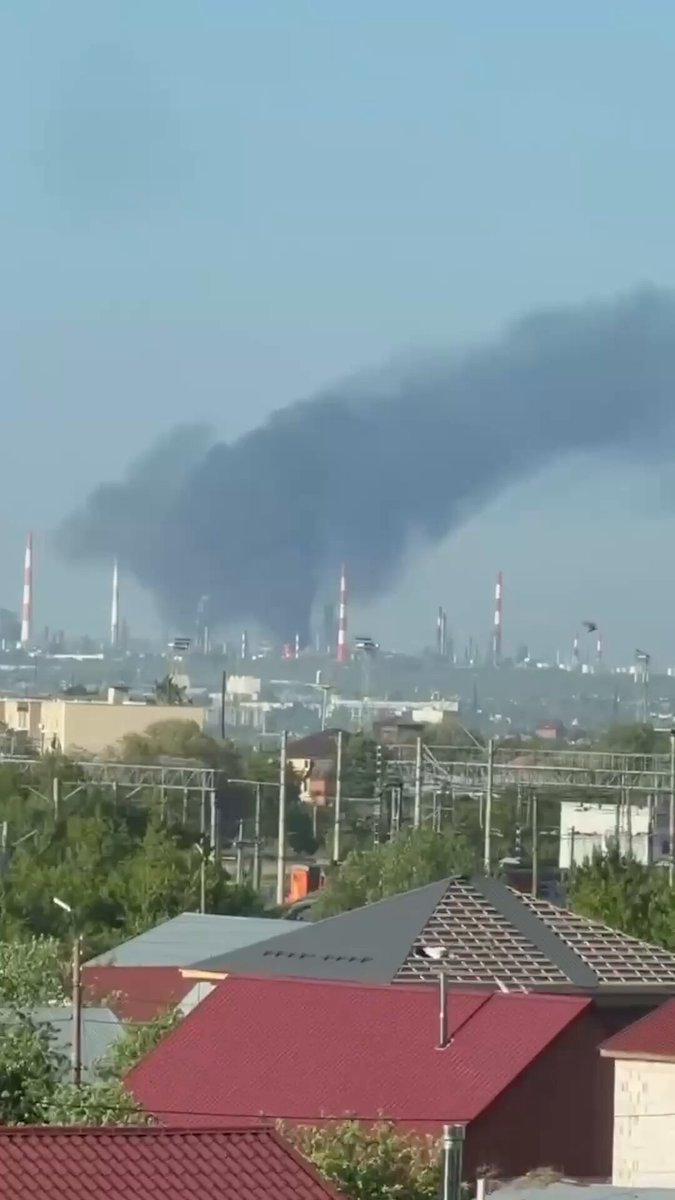
“Another Ukrainian long-range sanction against Russian oil refining — and we are continuing this line of action. This time around, it was the Syzran oil refinery — more than 800 kilometers away from our border.”
Keep them coming. Great content!
New to your stack, great read. Difficult to relate to future arrows on the map. For every Ukrainian innovation there will be a Russian counter. Temporary upper hands will not last forever is my worry/concern.