
Drone Dominance: Gauntlet Phase I: Essential Field Notes
What can we learn from the first stage of the world's largest drone buying program?


The term gauntlet evolved from describing the armored glove that protected the hand of a swordsman, to a challenge of an opponent to a duel (”throw down the gauntlet”; though it is debated if that was ever a thing), to a brutal military punishment in the 17th century (”running the gauntlet”), to a figure of speech about facing harsh criticism or hard times and obstacles. From 2026 onward, for folks in defense, it will either be known as an evolution of the procurement challenge, with dramatically shortened timelines and massive budgets, or as a very public failure. Whatever the outcome may be, the ingredients are exciting (and the term Gauntlet in the program is misunderstood and misreported, as you’ll read below).
In this TECH WARS Field Notes series, we will be accompanying and investigating the Unites States Department of War’s (DoW’s) Drone Dominance Program, analyzing the program and its participants, to extract the maximum amount of insights for you.
Hello everyone, and welcome to the first of a handful of new formats on TECH WARS. Essential Field Notes sit between news and our Deep Dives, giving you deeper insights into current market developments than you’ll find elsewhere, but delivering them to a more bullets-compact format than TECH WARS Deep Dives. Expect them to release more often, with the next one to release within days of this one.
This first edition of TECH WARS Field Notes is completely free. As we’re introducing new formats like shorter articles, interviews, podcasts, company portraits, guest authors, and product deep dives, subscription prices will increase accordingly (read: significantly). However, we will be freezing all existing subscription prices indefinitely. Claim the current subscription fee even as we deliver more output, and join your fellow defense and dual use leaders (including some of the winners and judges of Gauntlet) by subscribing now:
Next In This Series
Drone Dominance: The Real Race: The PE and Corporate Development Battle Over Who Gets to Be the Next Big Prime Contractor - to be published within days after this article releases.
Drone Dominance: Products and Positionings of the DDP Phase 1 Participants - Mass Production & Scaling, Designs & Form Factors, Software & AI...
Drone Dominance: The New Reality of Global Unmanned Systems Production & Procurement, and How to Be Ready for It As an Investor and Industry Executive
What You Will Learn From These Field Notes
What is Drone Dominance?
Gauntlets
A Process Race
Who Is Who: Meet the Participants (and those who are participating but have not been covered by the announcement)
Testing and Live-fire TRL Iteration Facilities and Capabilities
Autonomy Kit Software and Hardware Vendors
UAS & UAS Training Vendors
Multis, Parts and Subsystem Vendors
Notable: EU and Ukrainian Winners
Other/Special
Stealth Companies
Learnings for governments, industry and investors
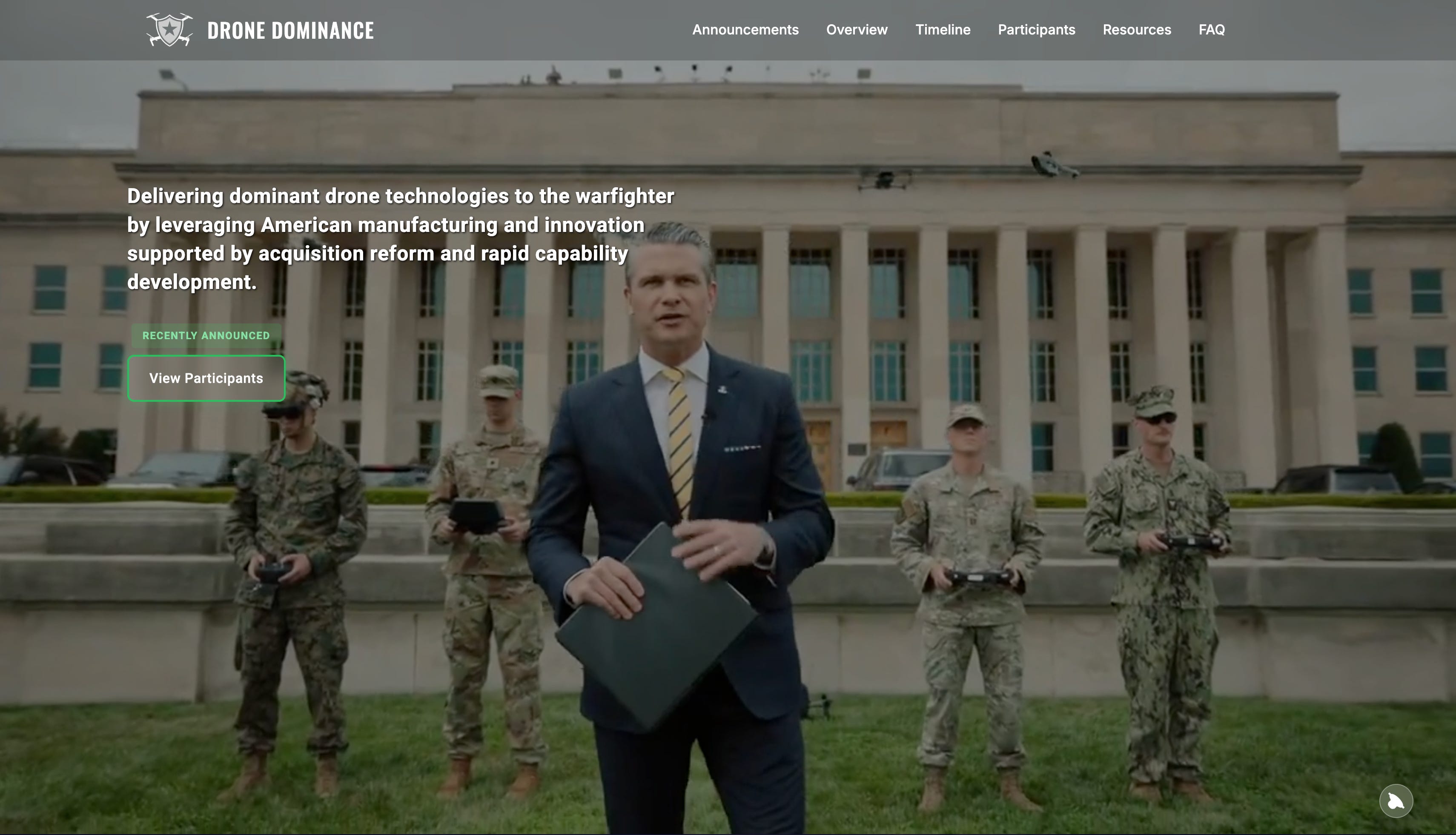
What is Drone Dominance?
All quotes in this section from the original request for proposals (RfP), if not stated otherwise.
On the face of it, Drone Dominance (DDP) is a procurement competition. While those aren’t new, the scale and speed of the program, and its focus on industrial base building, are.
“Rather than purchasing systems based on paper requirements, the DoW intends to buy demonstrated capabilities through live competition.”
The first big game changer: the accountants and requirements writers are not running the process, the soldiers/warfighters are. This is a pivotal departure from a long tradition and from the way that most of, e.g. Europe and Asia, still runs its procurement. It means that you can’t win an RfP with paper anymore, but that you need to show and prove. If your systems fail, you’re out. While not suited for every procurement, we think that this is the only way forward (and literally how David Ukraine managed to stand up to a giant). As we’re covered before in our writings about defense and dual use procurement innovation, could make all the difference, if a second important change is made. More on that below.
The Drone Dominance Program (DDP) intends to award $1.1 billion in prototype orders utilizing 10 U.S.C. 4022 over four independent phases in the next two years.
§ 4022 = “Authority of the Department of Defense to carry out certain prototype projects “. This is still a prototyping program (with responsibility for decisions with the Executive Branch, not Congress).
This multi-phase plan is an advanced market commitment: the Department is posting quantities and prices up front and will award fixed price prototype deliveries with vendors whose systems meet the Gauntlet performance and delivery requirements.
The second big game changer, and one we have written about extensively at TECH WARS: fixed, transparent purchase commitments stimulate a very different industry reaction, and it is the only proven way to stimulate actual industrial base growth from a defense economics perspective.
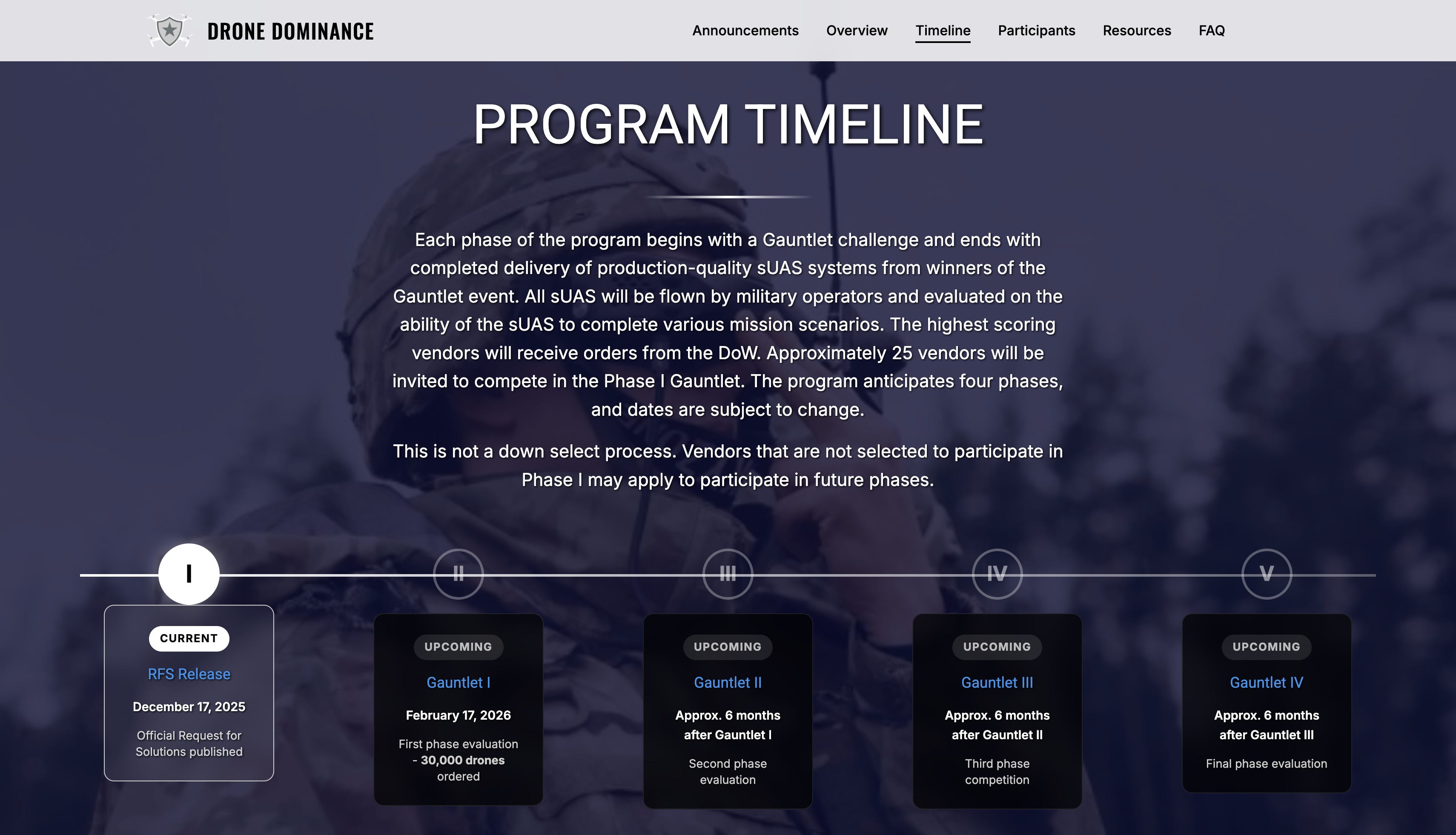
Each phase begins with a Gauntlet test event, run by the Test Resource Management Center, and ends with delivery of sUAS via an Other Transaction – Prototype delivery award for the winners of the Gauntlet. The Gauntlet events are designed to test capabilities. The awards are intended to test production scale and operational use.
Other Transaction Authorities (OTAs or OTs) have been the secret ingredient that stood up the US commercial space industry via the Commercial Orbital Transport Services Program (COTS Program - SpaceX’s first commercial US government contract to resupply the ISS), and have been used extensively to promote industrial innovation ever since, for instance by the Defense Innovation Unit (DIU). Oversimplifying, they represent money that has already been allocated, and thus does not need to pass Congress. In short: money that can move fast because it requires no debate or consensus anymore.
Gauntlets
Each phase begins with a Gauntlet test event, run by the Test Resource Management Center…
This is often being falsely reported: it’s Gauntlets, plural. Every single stage-gate is a red-teaming exercise. Participants thus don’t just compete with what they have on offer now, they are required to operate.
and ends with delivery of sUAS via an Other Transaction – Prototype delivery award for the winners of the Gauntlet.
The DoW is testing not just whether a company can deliver a technology, but it is also testing whether it can scale production. Wrapping this into a stage-gated process is akin to how the COTS program and lots of others (disclaimer: some designed by the author of this article) de-risk both government and companies from participation in the process. The message to government agencies and branches is: no worries, before this needs to perform at scale, we’ll have them jump through the hoops to ensure that they can deliver. The message to the companies is: no worries, before you need to scale massively, you and your investors will have certainty that you’re going to get the orders.
A Process Race
The step-by-step, batch-wise, low- to- no-requirements, operator-/user-focused approach, which builds on the work of the DIU and others, is the proven fastest way to scale innovation into service. It has just never been done at this scale and pace. The verdict about whether this will work as intended is still out, and there are lots of factors, from old, encrusted structures, some of which are still in existence, to the kinds of participants the sums put up by the DoW attract. More on those in the next episode of this series, which will release next week. Get subscribed to secure your frozen subscription fee before it increases prior to the release:
Who Is Who: Meet the Participants
Disclaimer: most companies try to position themselves as vendors of multiple kinds of solutions, and their positionings reflect both their current offerings and their aspirations for the future. We are aware that some of the industry and procurement executives, as well as some of the investors involved in this program are reading this. The following categorization, while based on the primary public positioning or origins of the companies’ tech stacks, but is on no way trying to be anything more than informal. All images by the respective companies, if not stated otherwise.
Testing and Live-fire TRL Iteration Facilities and Capabilities
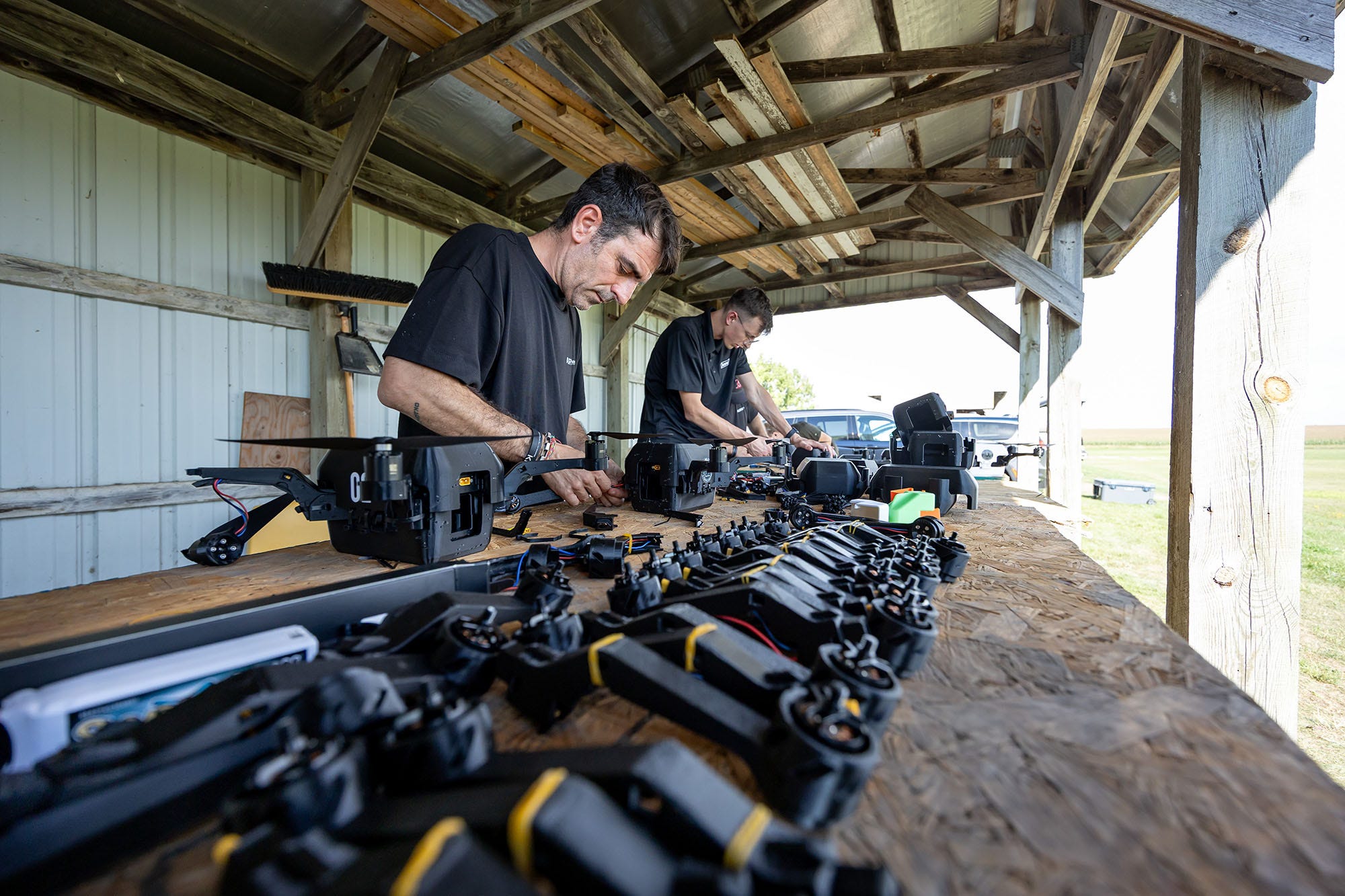
Anno AI: The Arena and Lake Superior Test Range: testing and monitoring infrastructure, labs, warehousing, manufacturing for iteration.
Autonomy Kit Software and Hardware Vendors
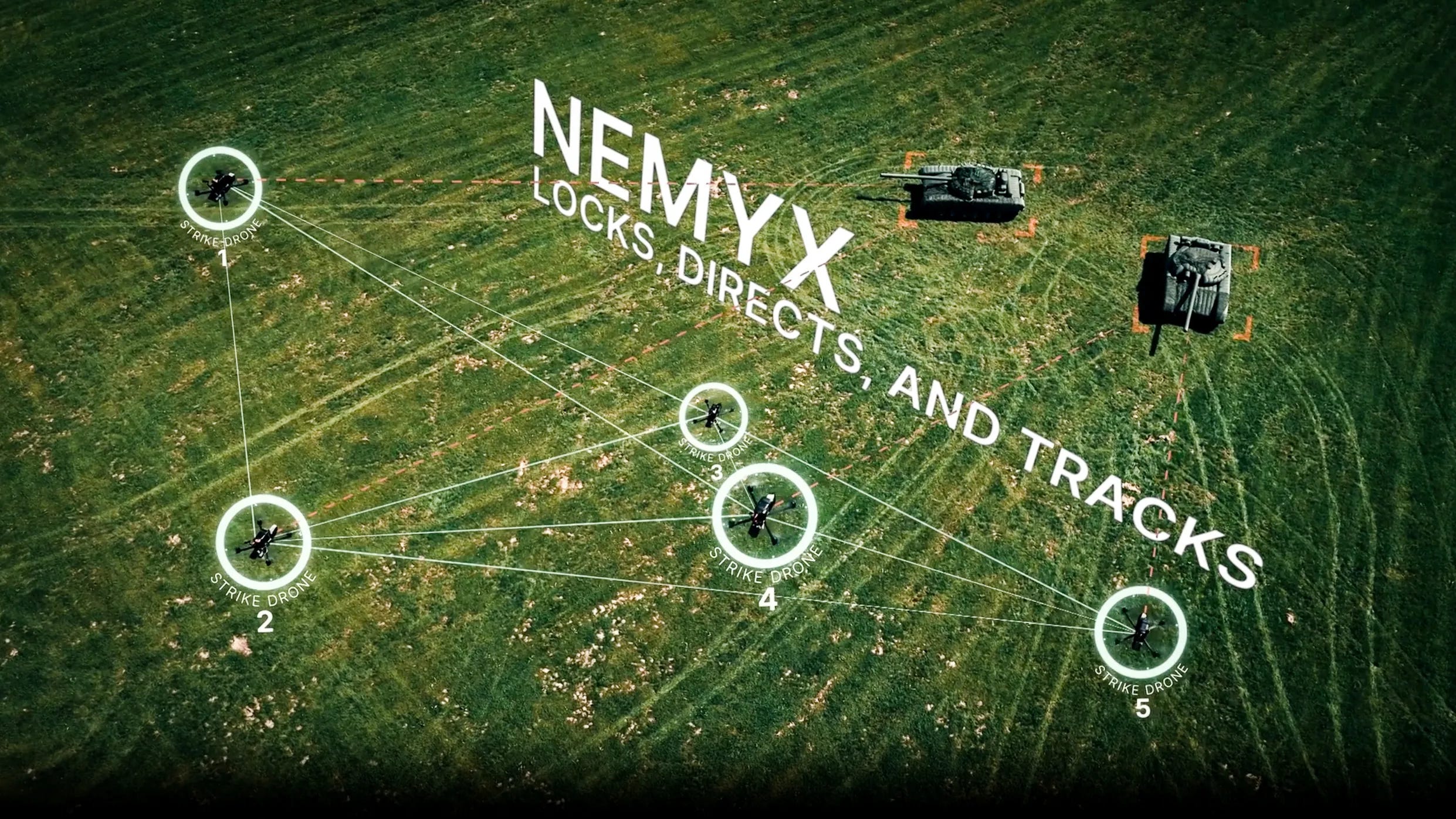
Auterion Government Solutions: device-independent autonomy upgrade kits and integrated drones as a reseller (thus potentially entering Drone Dominance in partnership with Quantum Systems as a hardware provider, through Auterion as a reseller in the US via its existing DoD contracts/authorizations).
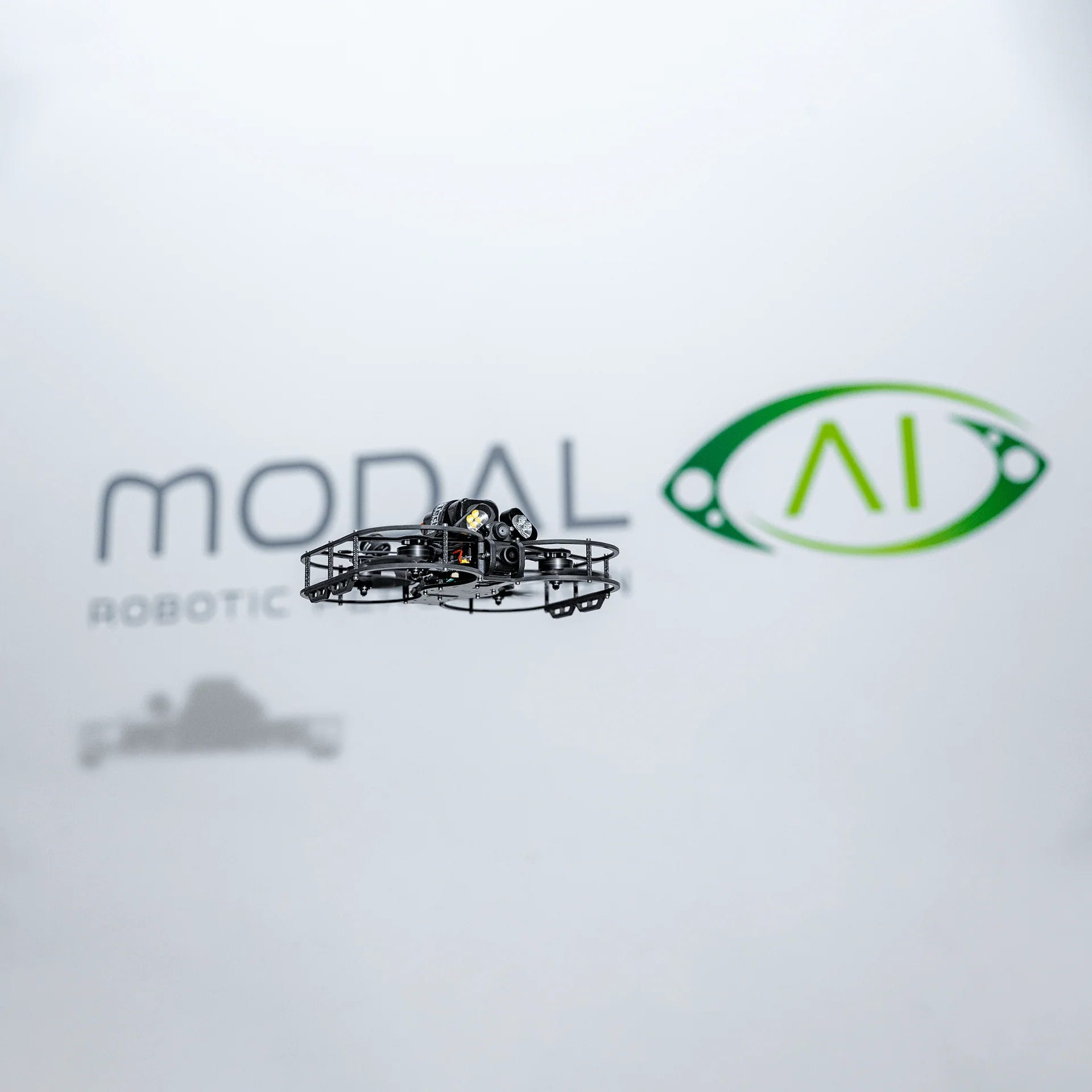
ModalAI: developments kits/reference FPV drones, avionics and single-board microcontrollers (think Arduino)/automation & autonomy upgrade kits
UAS & UAS Training Vendors
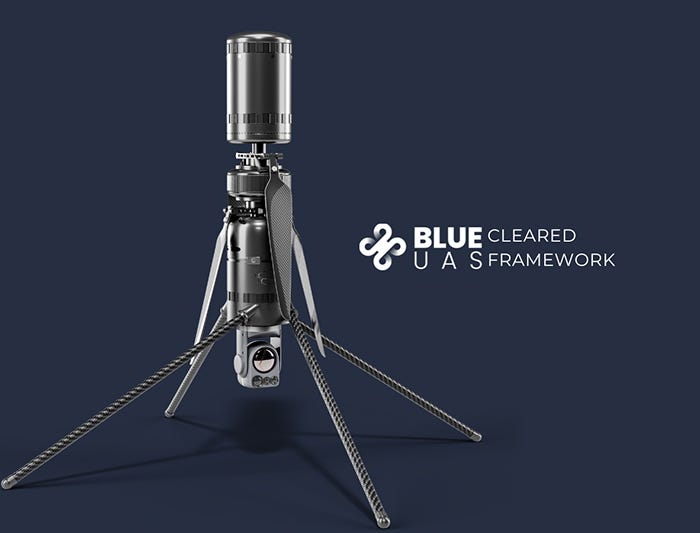
Ascent Aerosystems: coaxial motors/rotors, cylindrical-shape helicopter-like counter-rotating dual-rotor drones. Counter-rotating dual rotors, like used in the Sikorski S-97 or the CH-47 Chinook (as a tandem rotor), stabilize helicopters without the need for a tail rotor. In the case of Ascent’s coaxial drones, the rotors are foldable, drastically increasing portability of the system over, e.g., a quadcopter, or other systems for similar use cases, like short-range, squad-level reconnaissance.
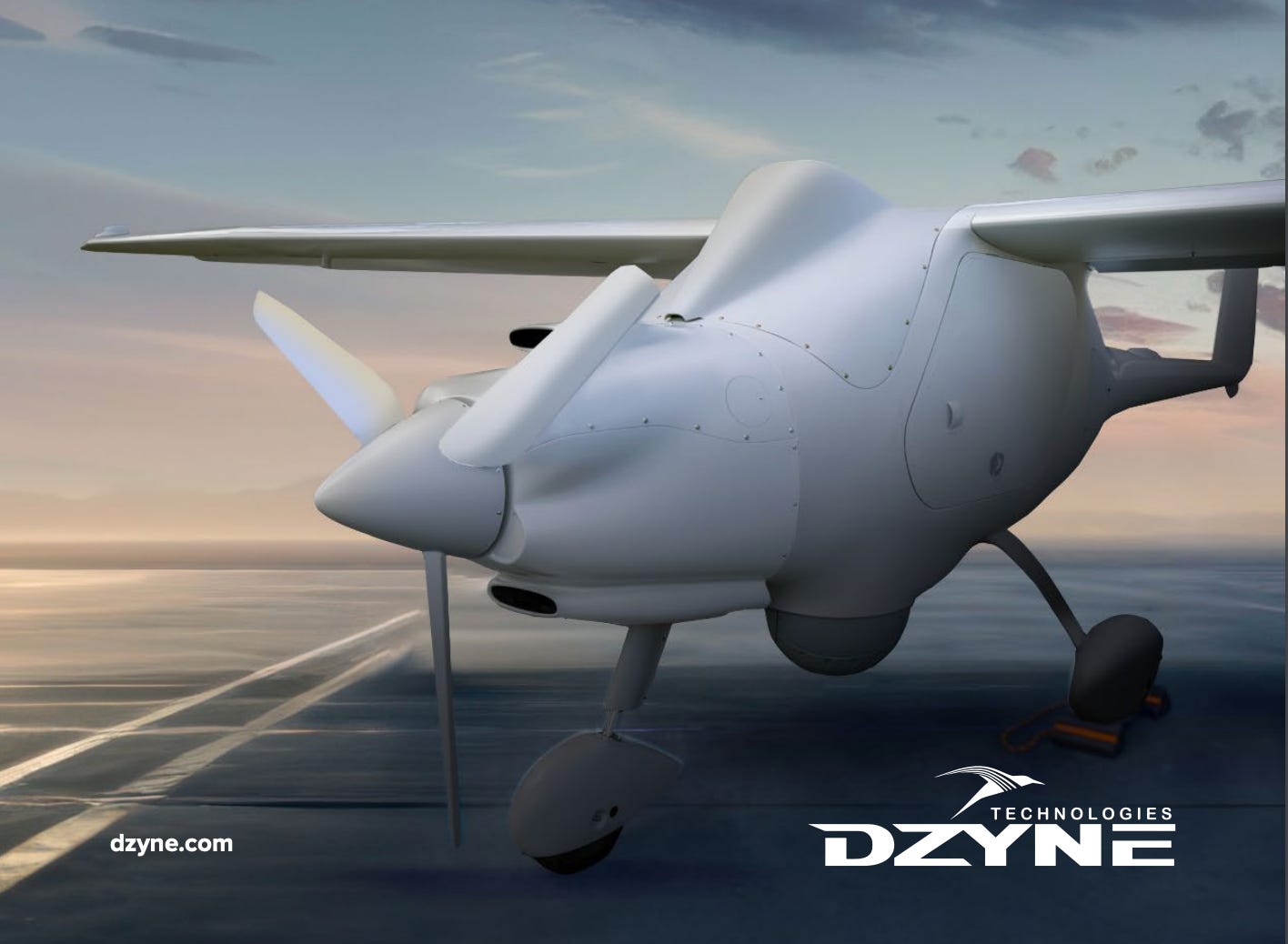
Dzyne: mid- and long-range ISR drones, strike drones (no public information), and ISR-T (T = targeting/target designation) software solutions.
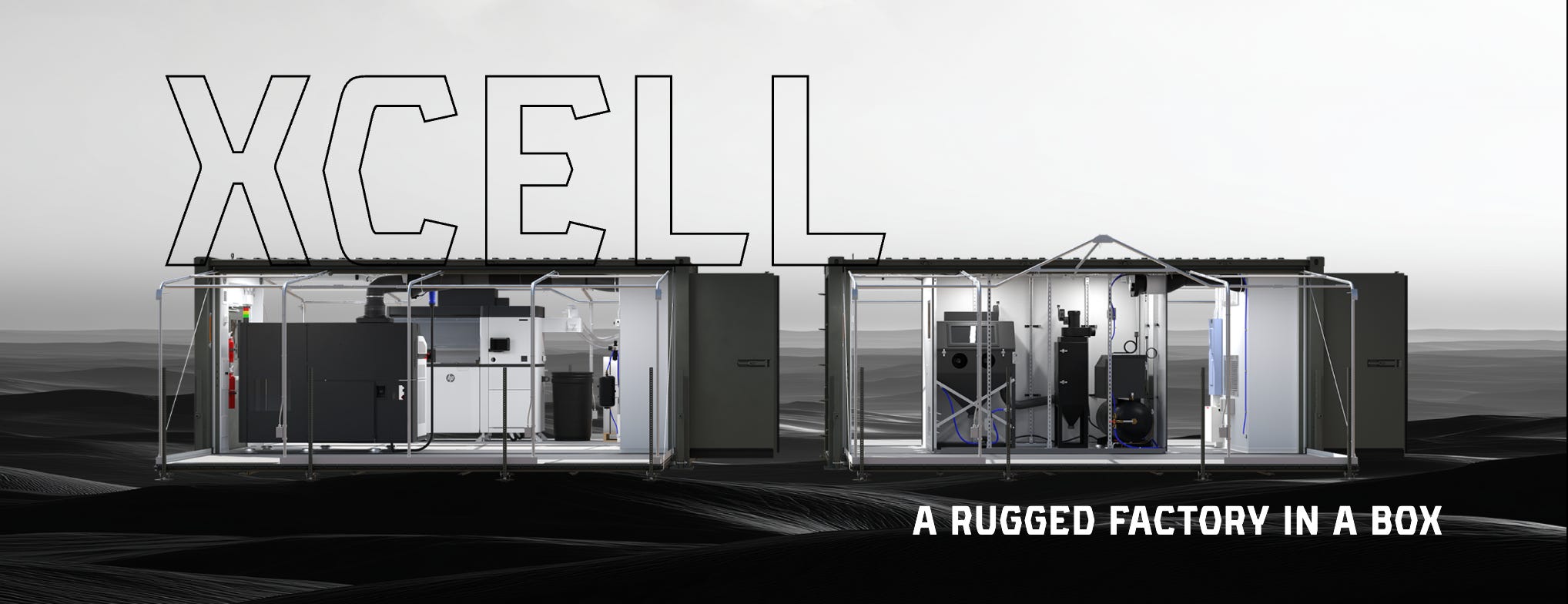
Firestorm: short- to mid-range modular payload drones, distributed (container-sized) production for UAS, spare parts and other polymer-based parts (largely 3D-printed; see below).
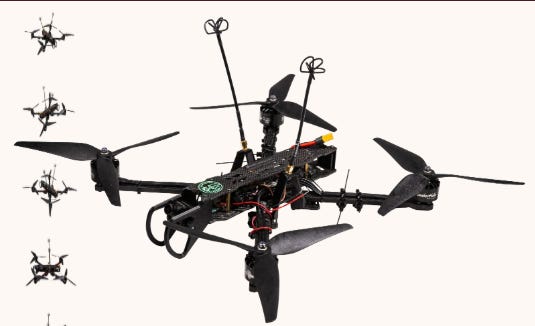
A rare classic-design (non-bullet) quadcopter interceptor drone by General Cherry: the AIR Pro
General Cherry (Ukrainian known as Heneral Chereshnya): producer of ultralight ISR, strike, as well as day and night Shahed-type interceptor drones (Bullet) with >300 km/h, as well as interceptors for smaller drones (AIR Speed & AIR Pro) and ground control stations (GCS).
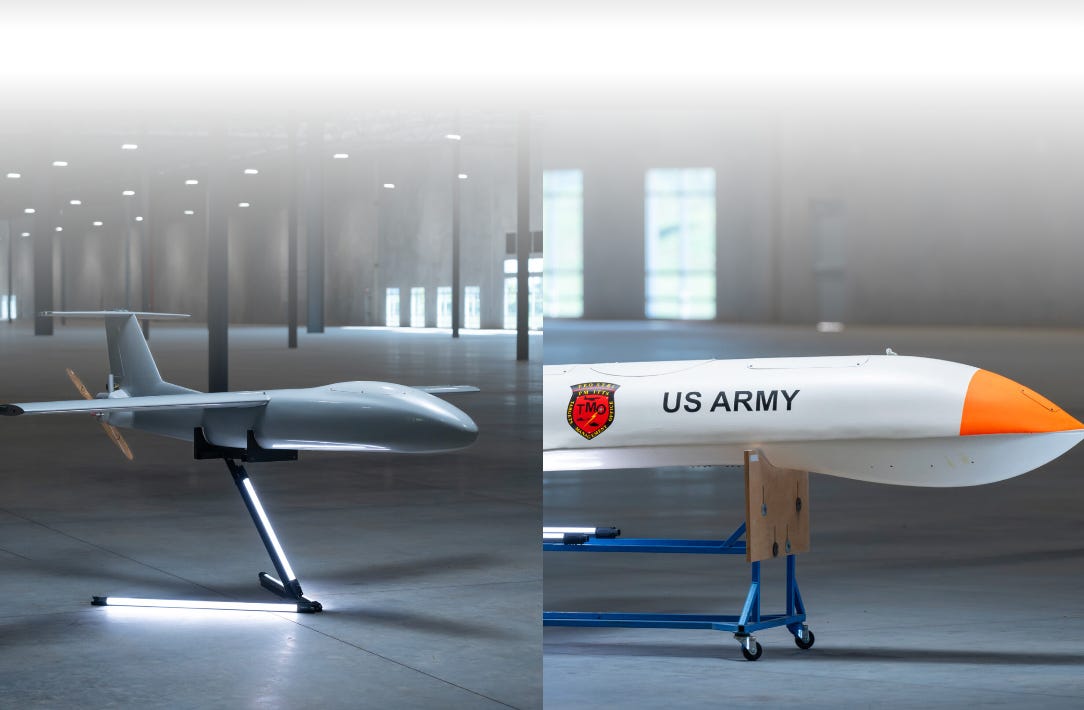
Griffon Aerospace: fixed-wing modular-payload rotor-driven drone manufacturer originating from kit airplanes and recently supplying the US DoD with target drones, including a fixed-wing VTOL (form factor like the Quantum Systems Vector) and the Shahed-like MQM-172 Arrowhead (featuring rocket-assisted takeoff (RATO) options; similar to the SpektreWorks LUCAS), which has been reconfigured at the end of 2025 as a target and training drone, as well as ground support equipment.
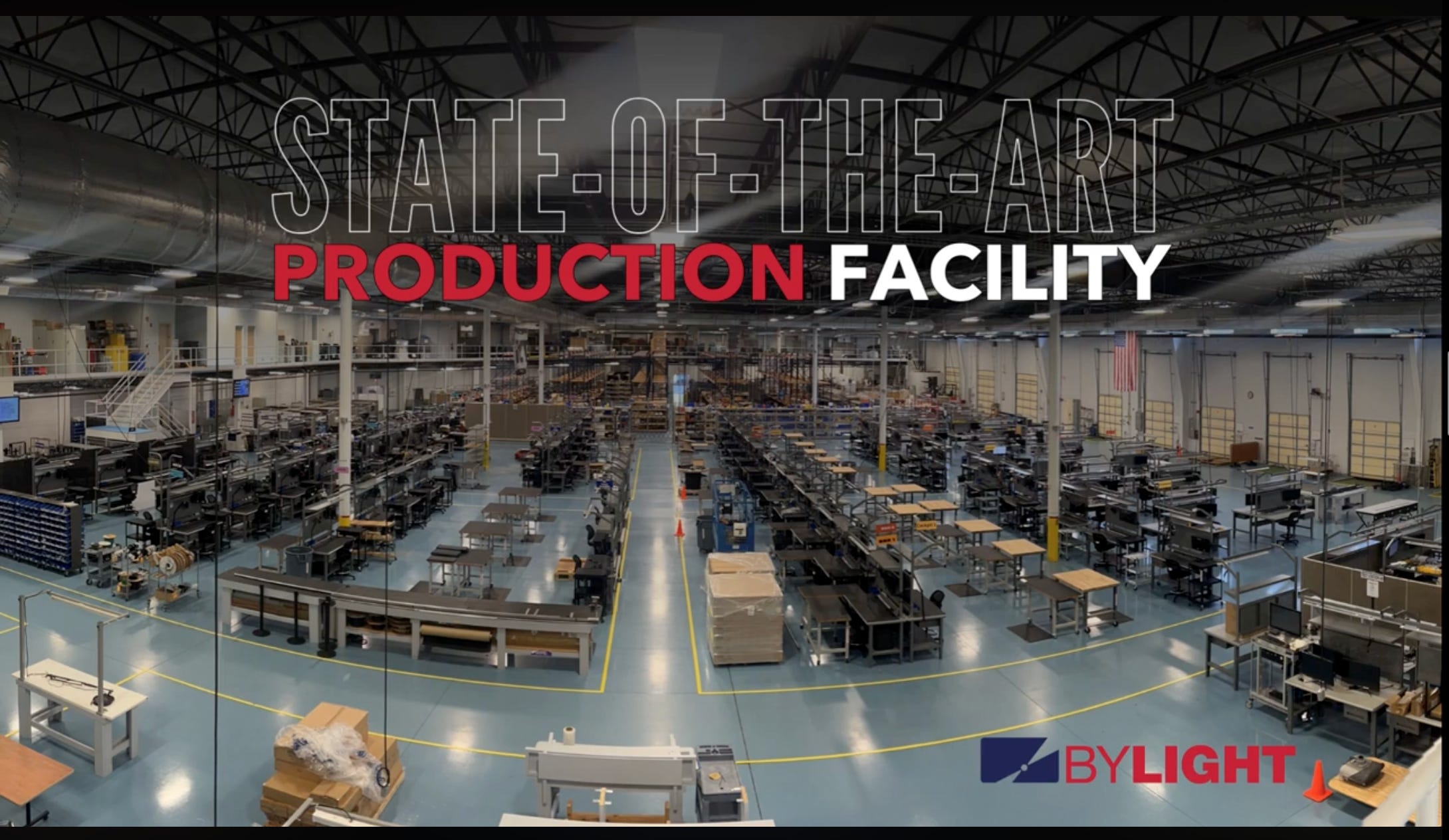
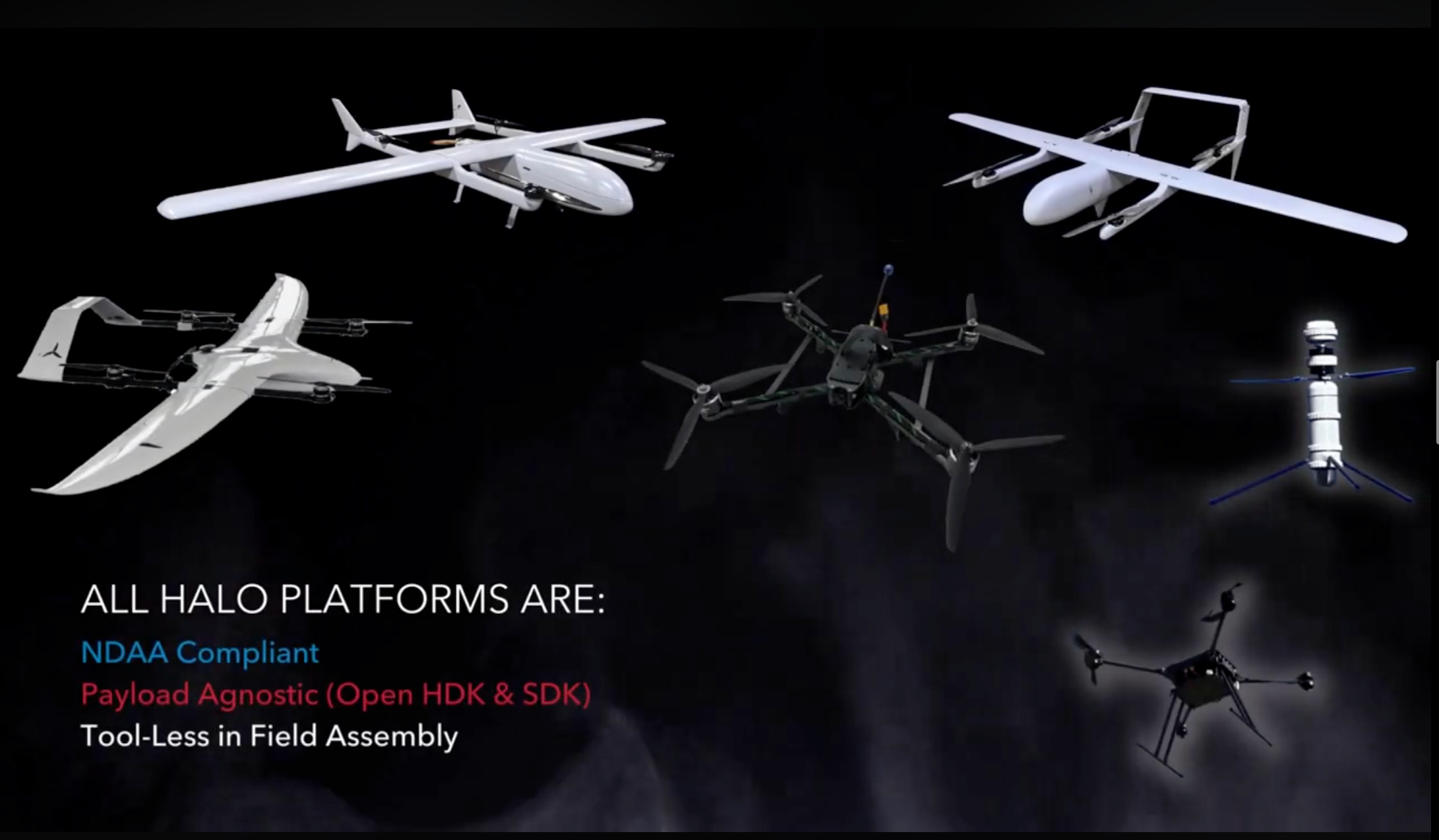
Halo Aeronautics: previously contracted by the US Navy/Special Operations Command; hard to find via Google search. A promotional YouTube video shows low-noise, EW-resistant drone sales pitch slides, and a factory of one of the joint venture partners (By Light, which also provides IT, cybersecurity, communications, modeling, simulation & training solutions; the other is a lightweight UAV maker called Hush Aerospace). Multiple R&D contracts and flight experience with NASA, including long-endurance ultralight designs and a laser-powered drone. Drones are pitched to be open-architecture (software, hardware, payloads), and tool-less. Drone models include small and large quadcopter, mid-range (150-300+ km) fixed-wing eVTOL quadcopters, and concentric propeller (akin to the Ascent system, though seemingly single-propeller), as well as training models (per catalog). Parts and pilot equipment are also sold. (Unlisted) URL redirects to By Light website.
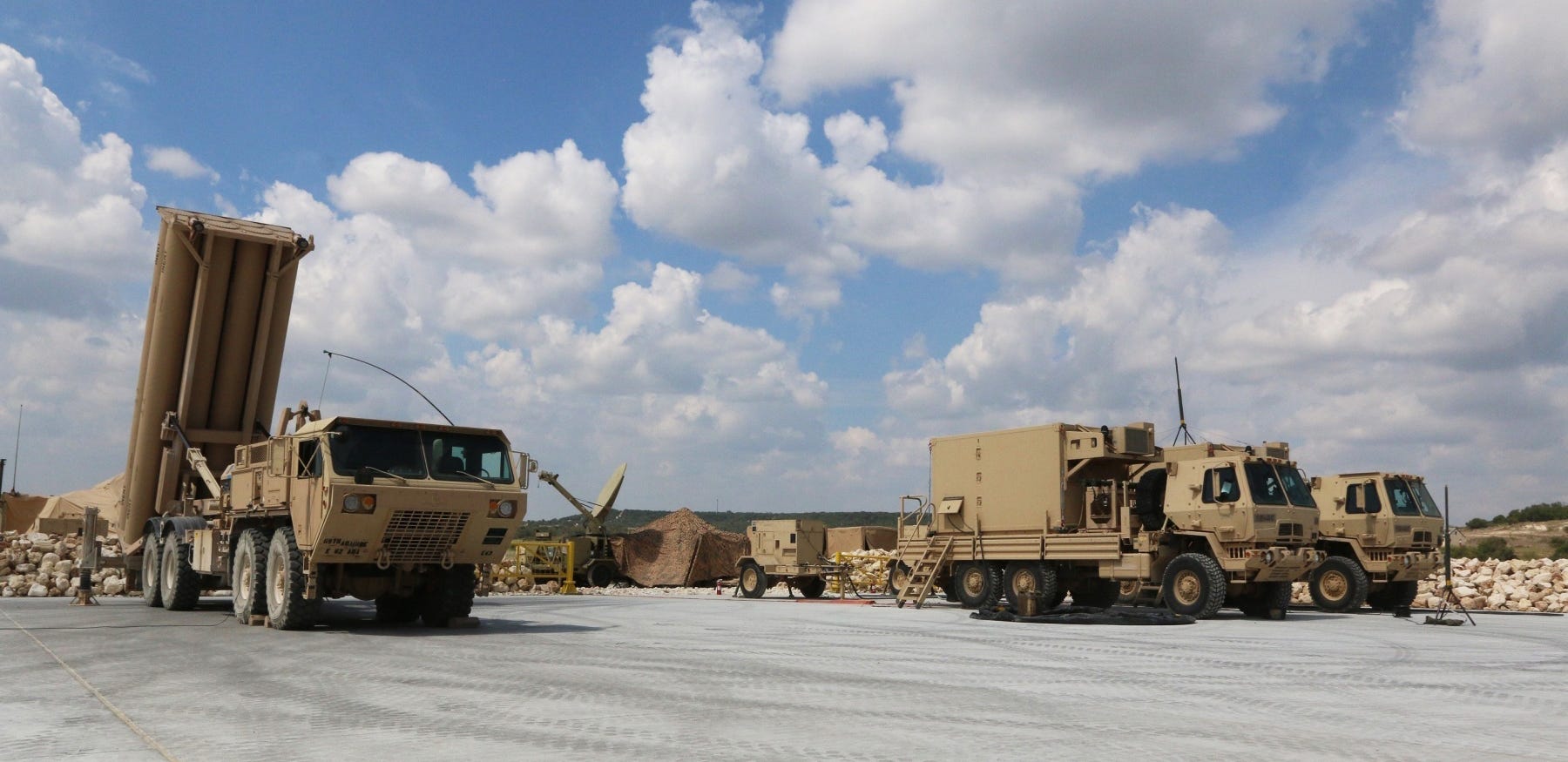
Kratos: one of the major contractors in the program, originating in wireless telecommunications like Ondas, makers of the Dark Fury hypersonic system, the XQ-58 Valkyrie unmanned combat aerial system (UCAS), engines and rocket motors, space situational/domain awareness (SSA/SDA), SATCOM and space-based command and control (C2) systems, missile launchers and radars, as well as communications hardware (RF, microwave, millimeter wave), signal intelligence (SIGINT), and anti-jamming modules for communication and navigation, air defense and Command, Control, Computing, Communications, Cyber, Intelligence, Surveillance, Reconnaissance, and Targeting system (C5ISRT), as well as testing and manufacturing for strategic weapons systems (nukes). Kratos will be one of our first TECH WARS Company Portraits; subscribe if you want to be notified when it is published:
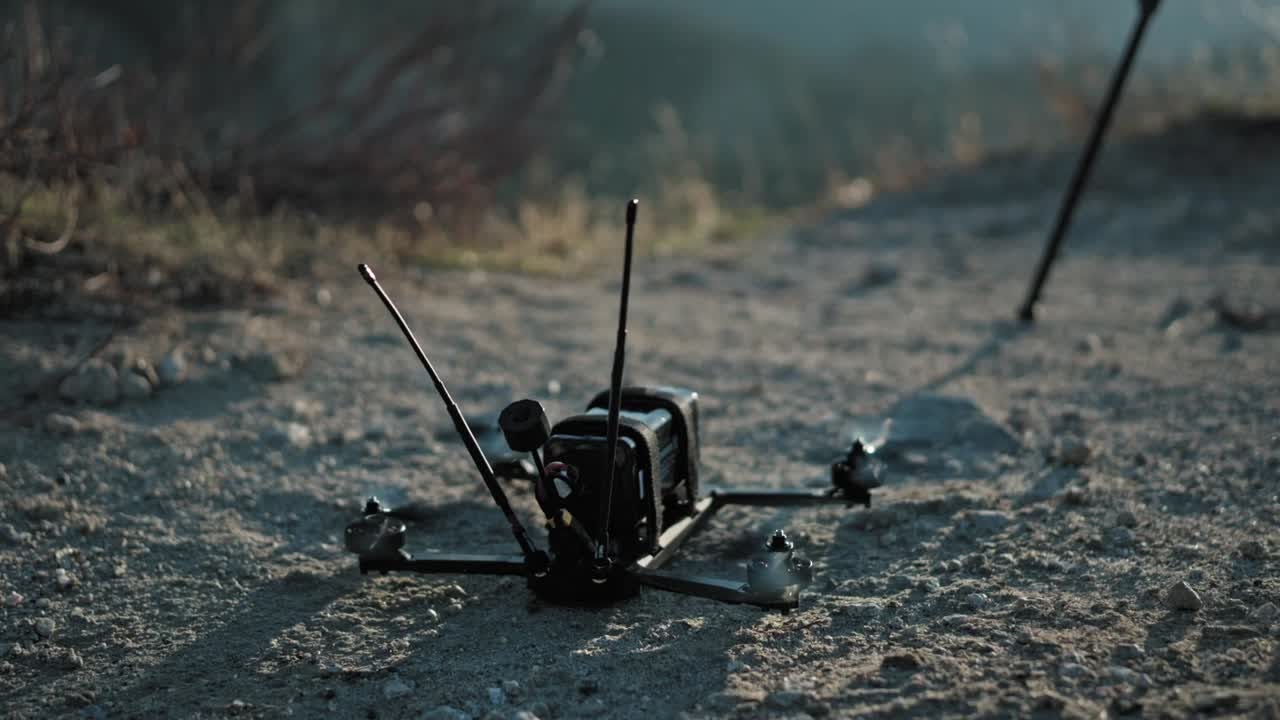
Neros: mass-production of strike-drones (notably recently also the first FDAA-compliant fiber-optic drone) and GCS. Previously contracted for the Purpose-built Attritable Systems (PBAS) Program by the US Army.
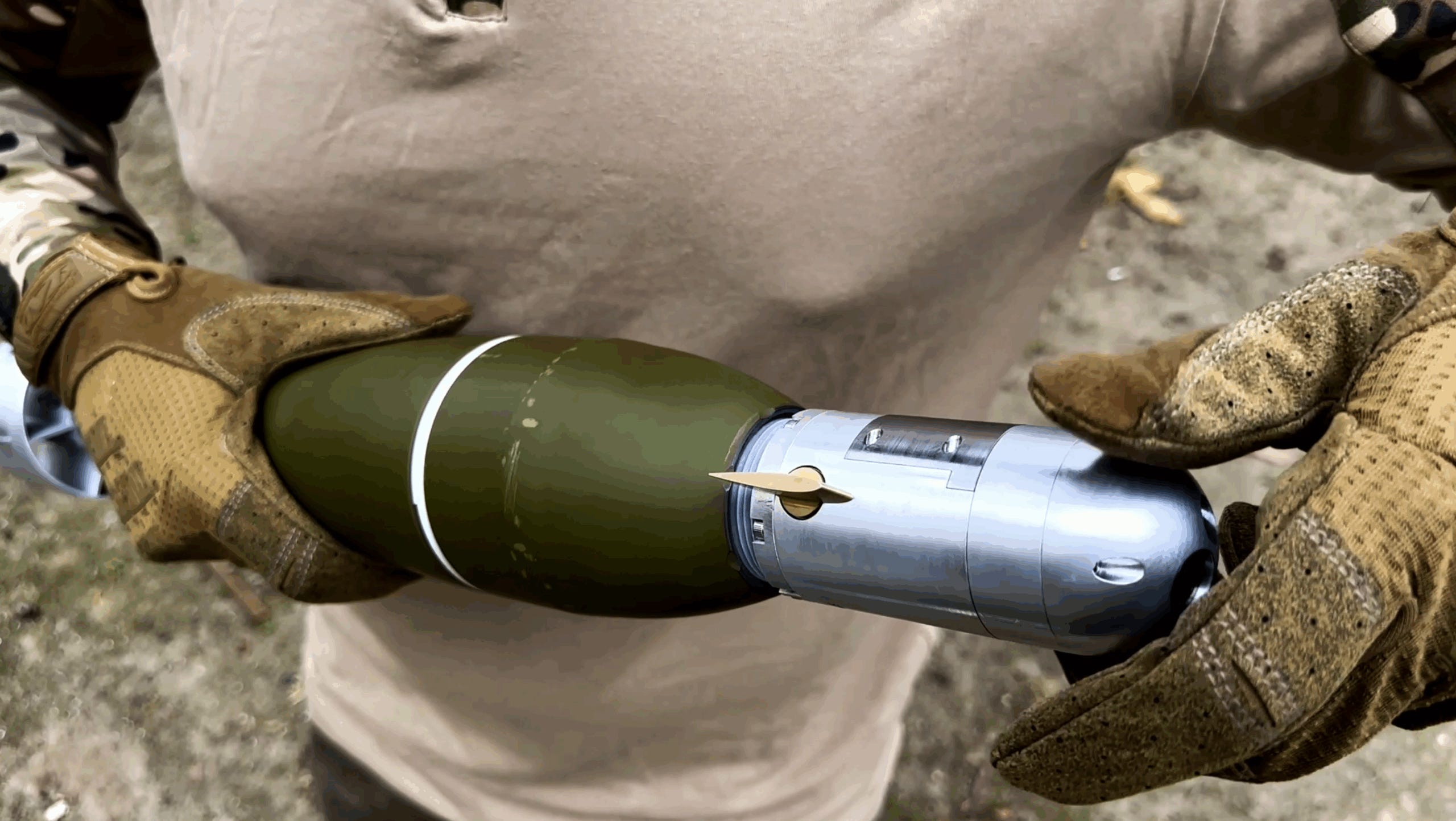
Nokturnal AI: FPV- and “deep-strike” drones (100-300km, so mid-strike in Ukraine), including a smaller Shahed-style jet-driven mid-strike drone, and a GPS-denied hardware/software navigation upgrade kit. Claims vision-based fire-and-forget autonomy. Interesting: not a single photo of one of its systems could be found online by us. Likely in collaboration with OKSI AI, makers of a guidance kit for mortar shells (image above; helpful for bomber drones).
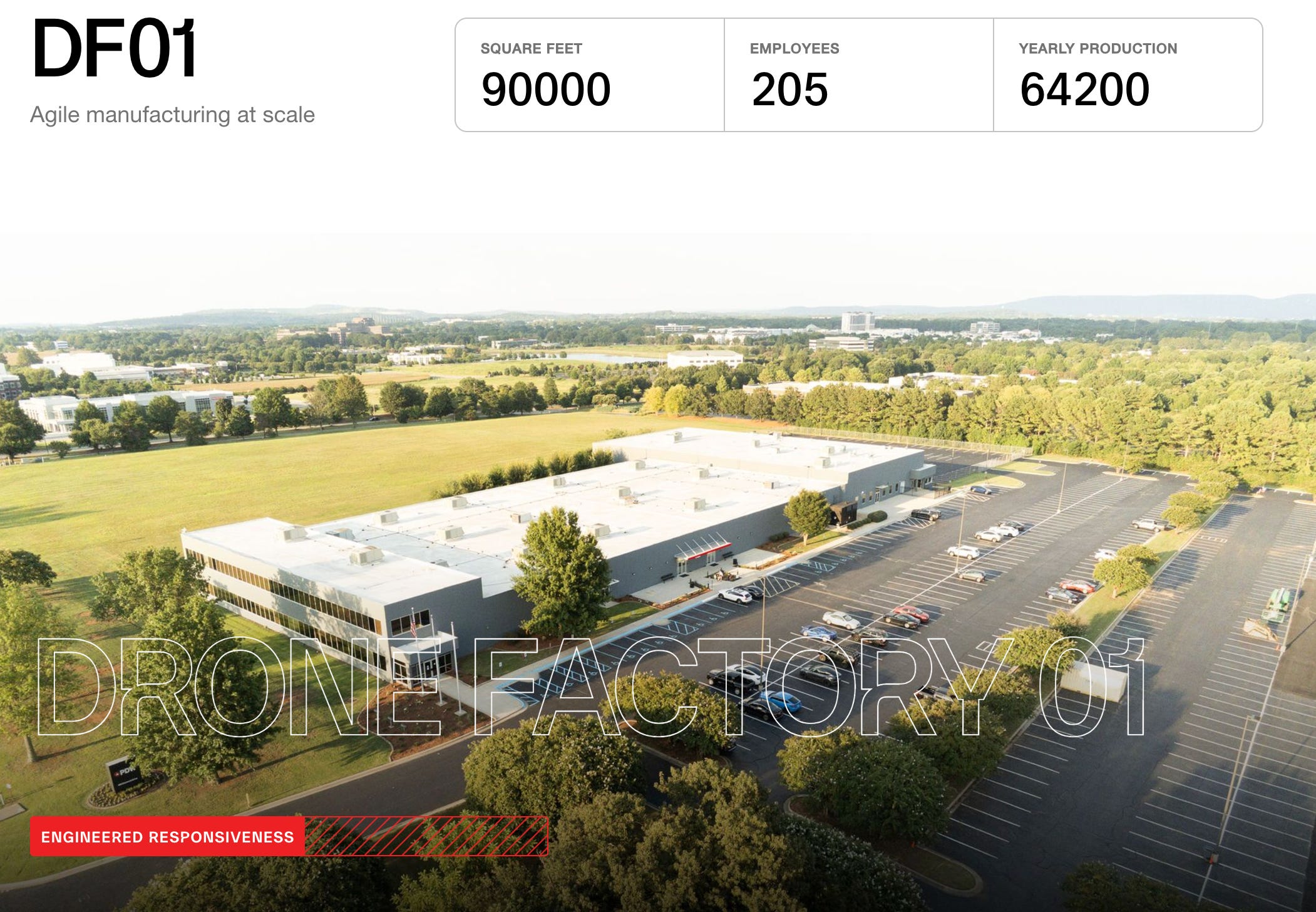
Performance Drone Works (PDW): mass-produced ISR and strike quadcopters, pilot training and mission planning solutions. Large (>5k units) established manufacturing facility in the US.
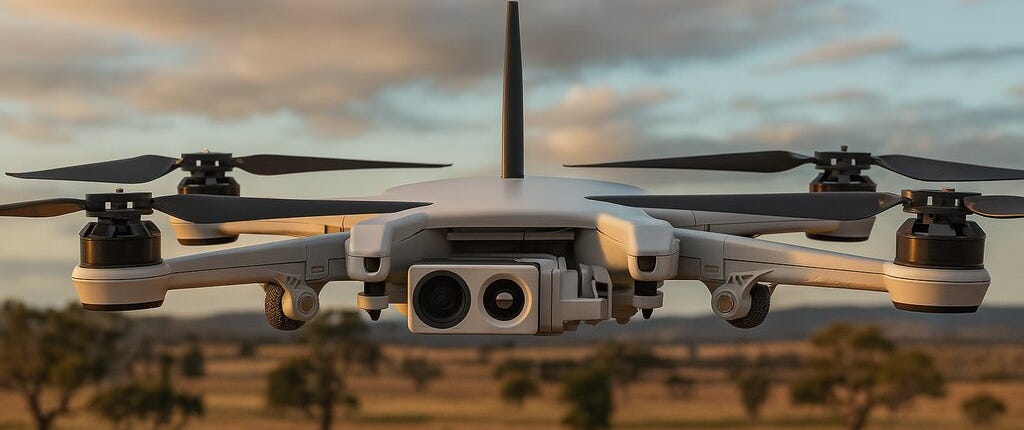
Teal Drones: ISR drone producer, part of Red Cat Holdings. Claims to use Palantir’s Visual Navigation (VNav) Software for GPS-denied flight (seems to have previously used Athena AI).
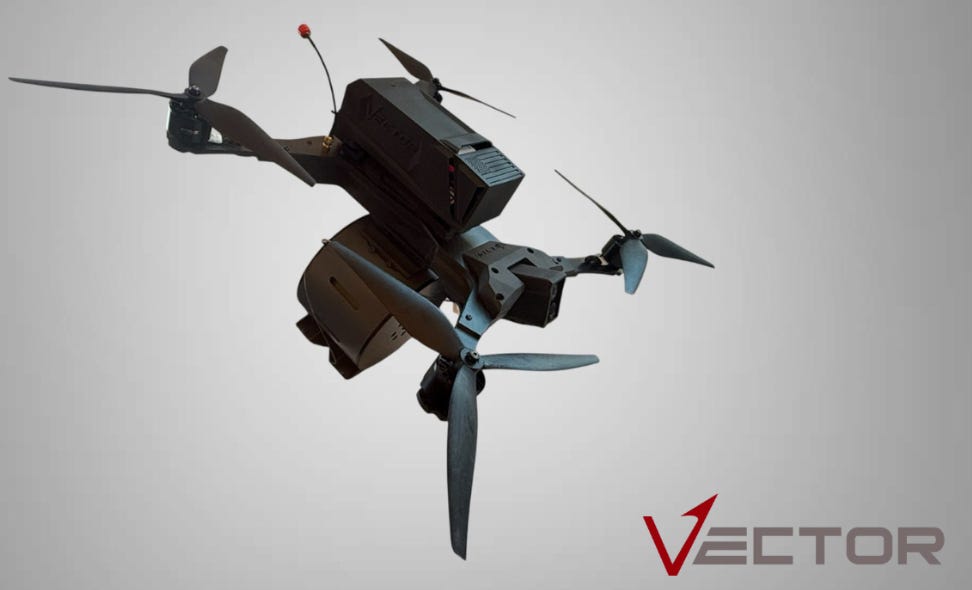
Vector Defense: training (manufacturing, drone attack defense, reconnaissance) and producer of a 10-inch ISR/strike quadcopter.
Multis, Parts and Subsystem Vendors
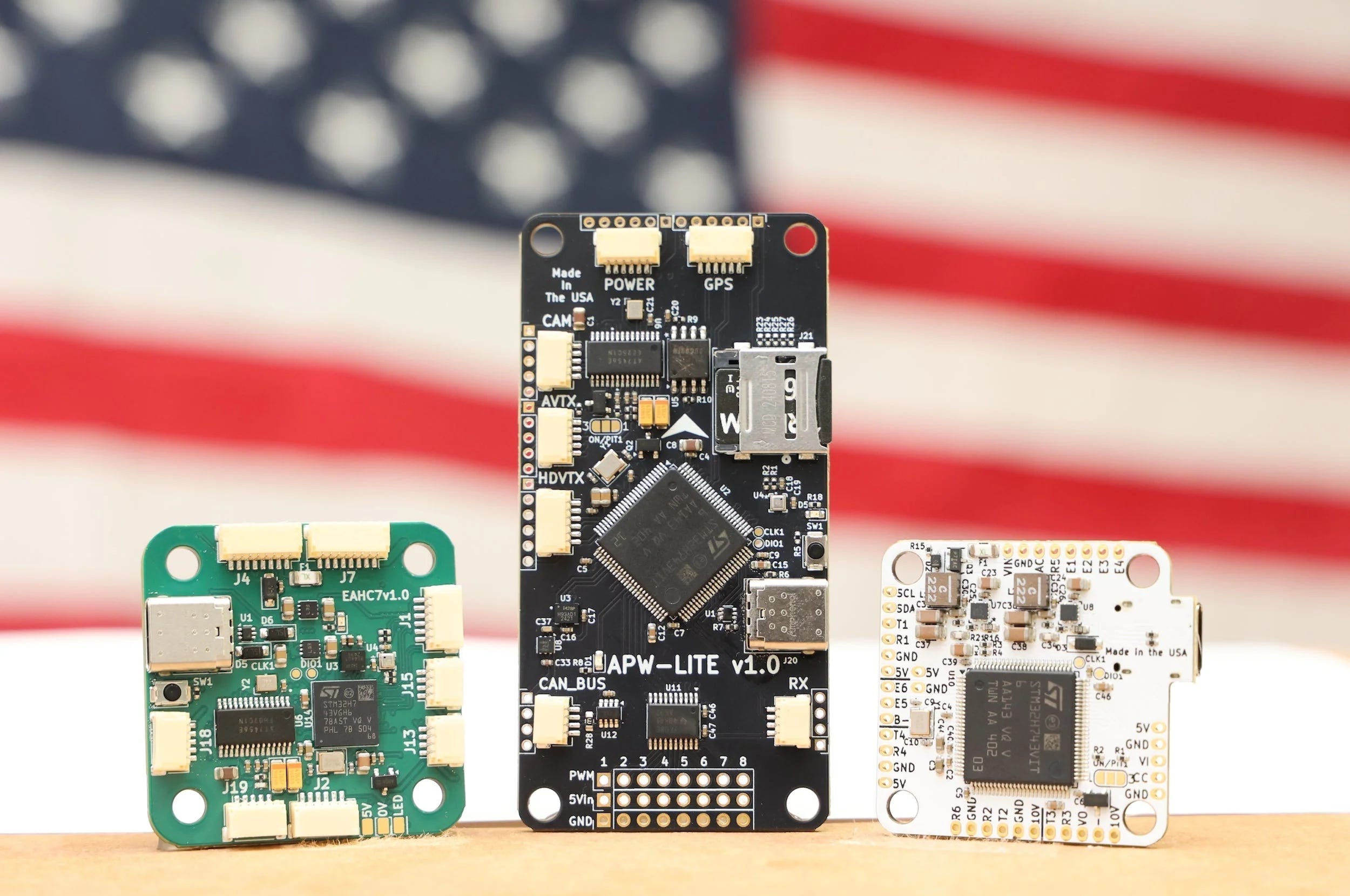
Ewing Aerospace: flight controllers, comms modules, electronic speed controllers (ESC; steers the motors, crucial part which enables, for instance, automation of the stable flight of quadcopters).
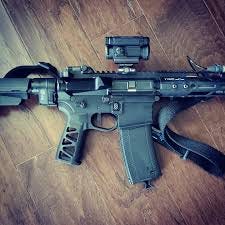
Farage Precision: CNC-machined parts (currently for sights, triggers, and other specialized firearm parts), as well as firearms training services. And “procurement, training, consulting, design and manufacturing as well as uniquely creative solutions”.
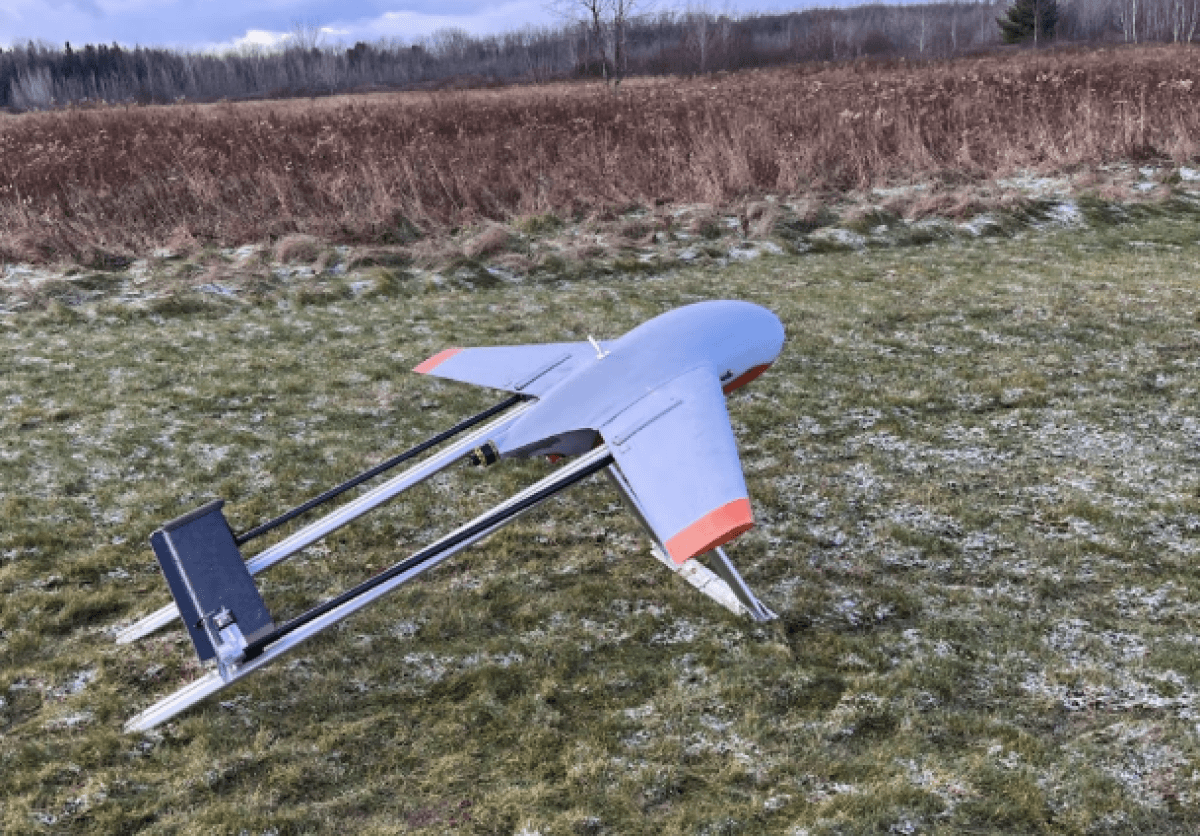
Greensight: avionics, data storage, processing, comms and other parts/software vendor, and UAS manufacturer (ISR, decoy/training, electronic warfare (EW; jamming), intelligence, surveillance and reconnaissance (ISR).
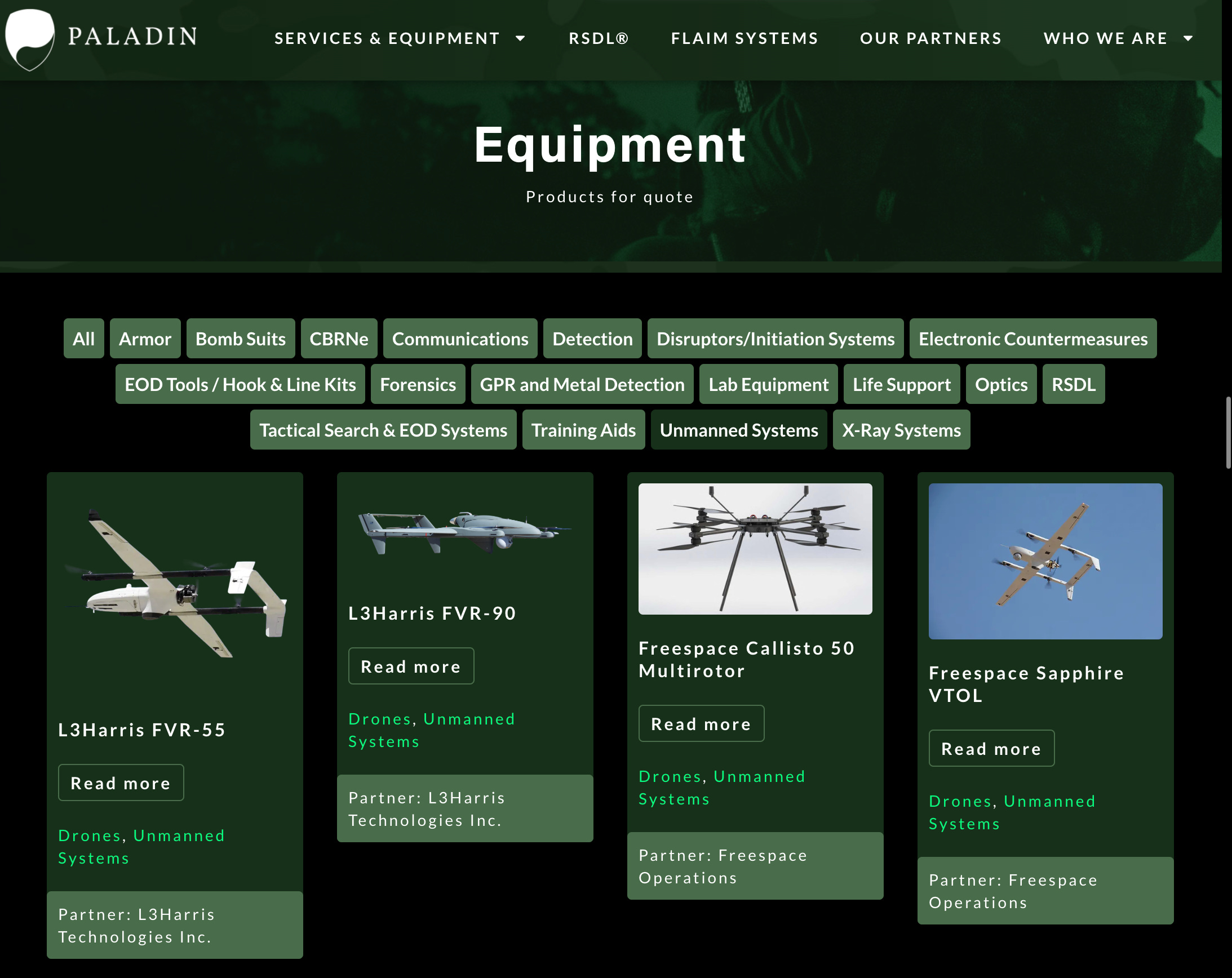
Paladin Defense Services: drone reseller, parts and subsystem vendor, supply chain and logistics service provider, with a specialization in counterterrorism and security.
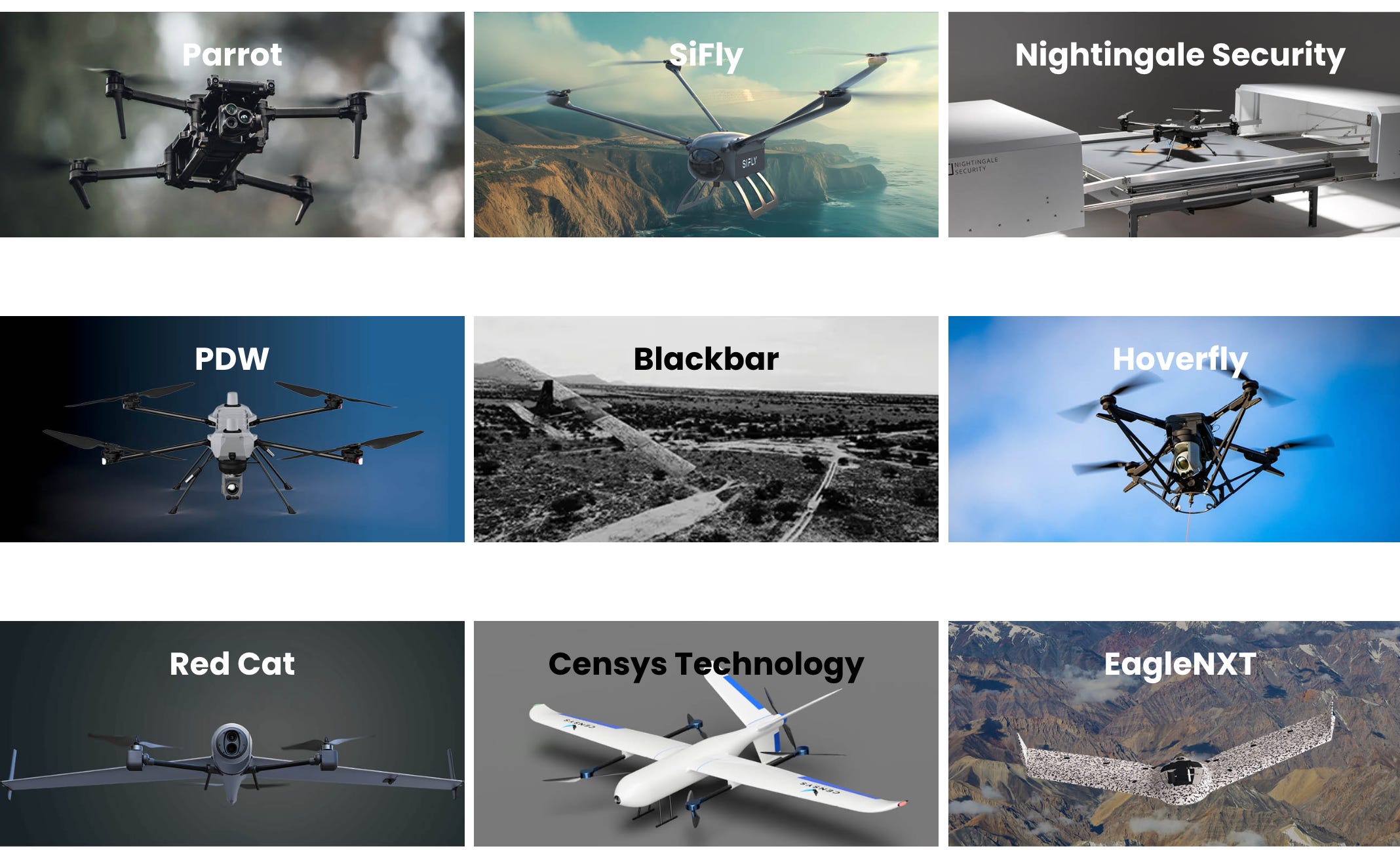
W. C. Darley: >100-year-old reseller/vendor and distributor of many types of products including drones, training, simulation, and special forces equipment. “1000s” of unmanned systems (UxV) in its catalogue. Reseller of some of the systems of participants in Gauntlet (e.g. FlightWave/Red Cat, PDW).
Notable: EU and Ukrainian Winners
Auterion: of Swiss origin, but headquartered in Arlington, Virginia since 2024.
General Cherry: see above.
Ukrainian Defense Drones Tech Corp (UDDTC): see below.
Other/Special
Responsibly: supply chain intelligence services provider.
Swarm Defense Technologies: drone producer specializing in large-scale “swarming” (from videos not dissimilar to formation flight during drone shows).
Xtend: heavily automated flight (”AI-driven autonomous, common-sense capable”) drone manufacturer. Works with Lockheed Martin Skunk Works, among others.
Secretive/Stealth Companies
Napatree Technology: hard to find via Google search, alleged website for sale, currently and previously contracted for interceptor technology (prototyping) and training by the US Army’s Europe and Africa Command (USAEUR-AF) in Eastern Europe. Potentialy previously publicly visible company that has gone stealth again (or just very bad at marketing and PR).
Ukrainian Defense Drones Tech Corp (UDDTC): no website, rumored to be the US entity of mass-producer Drone Flight Group, an Ondas Holdings investment.
Learnings
DDP Phase 1 has yielded a set of interesting winners. Interesting because of their diversity in terms of positionings, products and services, form factors, company sizes, geographies, and approaches to manufacturing. This is clearly a tryout kind of program, given the US committing 1/1000th of its defense budget, but it is one with a couple of important twists, about which we have written extensively at TECH WARS:
1. A transparent commitment
2. A sizable budget
3. Publicly available order numbers
4. Dependable timelines
5. A transparent process
6. The soldier/operator/warfighter as the determinator of functionality
7. A clear zero-concept rule (all tech needs to already fly)
8. Global reach, local job creation (this is the most common common denominator with other countries’ programs)
There’s a crucial learning hidden in all of this which is largely not covered in the press, and which deserves highlighting more than anything else as a driver of procurement innovation: embracing uncertainty by stage-gating a process that is more about show and prove than about marketing, sales and lobbying. We believe that this is the only way to innovate at the speed of Russia, Ukraine and China and de-risk the building-up of industry, and hope the DoW’s signal will send ripples throughout the ecosystem (disclaimer: the author of this article is consulting on such procurement innovation).
The unique mix of technological and operational approaches the Gauntlet RfP has resulted in is worth mentioning, and we hope you get subscribed, as we’ll be detailing those and the implications for global militaries’ unmanned systems materiel mixes in our upcoming article “Gauntlet: Tech Deep Dive”, which will release next week, before we dive deep into the procurement reforms and innovations currently underway by the DoW.
You read that right, we’re stepping up the tempo, and, starting with this article, introducing new formats like shorter articles, interviews, podcasts and more. To make sure you secure your spot among the existing subscribers (whose subscription fees will be frozen indefinitely) by the time we raise our subscription fee, be sure to subscribe now:
Next In This Series
Drone Dominance: The Real Race: The PE and Corporate Development Battle Over Who Gets to Be the Next Big Prime Contractor - to be published within days after this article releases.
Drone Dominance: Products and Positionings of the DDP Phase 1 Participants - Mass Production & Scaling, Design & Form Factor, Software...
Drone Dominance: The New Reality of Global Unmanned Systems Production & Procurement, and How to Be Ready for It As an Investor and Industry Executive
Disclaimers
The content of this and all other articles represents the personal opinion of the author, and should not be taken as financial or strategic advice. Any scenarios are fictional, and do not express nor aim to express a political opinion or advice. While we do our research diligently, we make mistakes. We’d be glad if you’d point them out to us, so that we can correct them. We are not a political publication, and don’t intend to become one. Any statements in this article are meant in a non-political sense.